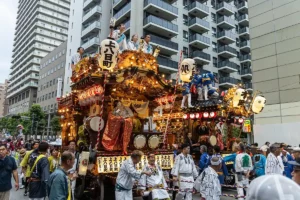

The Daigyoretsu is the opener for the famous Sanja Festival. It’s an event that brings three million visitors to Tokyo’s Asakusa district for three days of endless, incredible energy. This guide focuses on the spectacular opening parade, which is a photographer’s dream. You need to see this one. Things don’t get much bigger than this.
This parade is a photographer’s dream. It offers an opportunity to capture Japanese culture amidst Asakusa’s lively streets. If it’s your first time at this event, this guide will help you make the most of this incredible event.

The Daigyoretsu Parade is the grand opening procession for the Sanja Matsuri, one of Tokyo’s most significant festivals. At its heart, the parade is a vibrant celebration honoring the three founders of Senso-ji Temple.
This procession is a stunning, mobile tapestry of Japanese culture. It features a dazzling array of participants, including musicians playing traditional instruments and powerful taiko drummers. You will also see geishas in full, elegant attire and others dressed in historical costumes from the Heian period (794-1185).

For many people, the highlight will be the dancers in ornate heron costumes (shirasagi-no-mai). These birds are known to protect people from illness and disease.
The sheer energy, vibrant colors, and rich history on display make it an unmissable spectacle for any photographer visiting Tokyo.

The parade starts behind Sensoji and proceeds around the area. But the direction isn’t fixed. Every year I’ve been, it has been different. Attach yourself to the group and follow it.
Why? The giant red lantern and Nakamise shopping street are the perfect backdrop.
Tip: Arrive early. The area gets crowded quickly.
Why? There are opportunities to capture interactions between participants and spectators.
Tip: Use a wide-angle lens to include the street’s decorations alongside the parade.

Why? The temple’s architecture adds a traditional touch to photos. You can even juxtapose it against the parade.
Tip: Experiment with angles to include the temple pagoda and the Hozomon Gate in your shots.

Why? The parade concludes here. Participants relax.
Tip: Focus on portrait shots to highlight the details of the traditional costumes.

Arrive at least an hour, if not more, before the parade starts to scout for locations and set up your gear.


Focus on costume details, the expressions of the participants, and the temple buildings. These elements add depth and storytelling to your photos.

The parade is dynamic, with constant movement and action. Burst mode ensures you don’t miss moments.

While capturing the event, be mindful of the participants and spectators. Avoid obstructing the procession and ask for permission when taking close-ups of people.

The Daigyoretsu is colorful. Adjust vibrance and saturation to make your photos pop, but avoid over-processing.

Use cropping and selective focus to draw attention to the main subjects of your photos. This technique can help convey the energy and movement of the parade.

Consider converting some images to black and white. This can add a timeless quality to your photos and highlight the textures and contrasts.

The Daigyoretsu Parade is the grand procession that kicks off the famous Sanja Matsuri, one of Tokyo’s largest Shinto festivals, held over the third weekend of May. The parade itself typically takes place on Friday afternoon, starting around 1:00 p.m. However, schedules can vary slightly each year, so it is highly recommended to check the official Senso-ji Temple or Asakusa Tourism website for the exact schedule before you go.

The nearest station is Asakusa Station (Ginza and Asakusa Lines). Public restrooms are available, but expect long queues. Grab water from a convenience store before entering the temple grounds.
Be prepared for immense crowds, especially around the Hozomon Gate and main hall. Arriving early is less about getting a spot and more about being able to move at all.
Remember this is a religious festival, not just a photo opportunity. Be respectful of procession participants and follow any instructions from parade marshals.

The Daigyoretsu Parade in Asakusa is an experience that offers endless photographic opportunities. Its culture and tradition provide a unique glimpse into Japan’s rich heritage. By following these tips, you should be able to capture images that capture the spirit of the parade.
Pack your gear, plan your shots, and immerse yourself in the Daigyoretsu parade. Happy shooting! And don’t forget to share your masterpieces with the world.
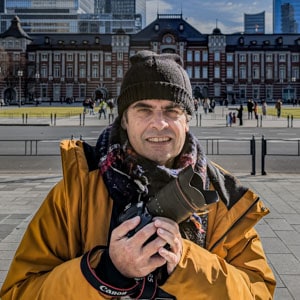
Rohan has photographed Tokyo since 2011. He shoots it with his Canon EOS R5. There are no plans to stop.
Did you like this post? Sign up to get my next one delivered straight to your inbox.
You have successfully joined our subscriber list.
| Cookie | Duration | Description |
|---|---|---|
| cookielawinfo-checkbox-analytics | 11 months | This cookie is set by GDPR Cookie Consent plugin. The cookie is used to store the user consent for the cookies in the category "Analytics". |
| cookielawinfo-checkbox-functional | 11 months | The cookie is set by GDPR cookie consent to record the user consent for the cookies in the category "Functional". |
| cookielawinfo-checkbox-necessary | 11 months | This cookie is set by GDPR Cookie Consent plugin. The cookies is used to store the user consent for the cookies in the category "Necessary". |
| cookielawinfo-checkbox-others | 11 months | This cookie is set by GDPR Cookie Consent plugin. The cookie is used to store the user consent for the cookies in the category "Other. |
| cookielawinfo-checkbox-performance | 11 months | This cookie is set by GDPR Cookie Consent plugin. The cookie is used to store the user consent for the cookies in the category "Performance". |
| viewed_cookie_policy | 11 months | The cookie is set by the GDPR Cookie Consent plugin and is used to store whether or not user has consented to the use of cookies. It does not store any personal data. |