Imperial Palace East Gardens

Escape the urban rush and step into the serene atmosphere of the Imperial Palace East Gardens. This sprawling park offers a unique blend of history, nature, and sweeping views right in the heart of Tokyo. Whether you are a photographer hunting for unique compositions or a traveler seeking tranquility, this quiet sanctuary offers an unforgettable experience in every season. Oh yeah, and the Emperor’s palace is next door!
Actually, it’s closer than that—these gardens used to be within the palace grounds. While few of the original buildings remain, the area was converted into a public park in the 1960s. Today, it is divided into three distinct sections: the main entrance area, the expansive upper lawn, and the lower Japanese garden.

The entrance and Imperial Collections
Near the main entrance, you will find the Museum of the Imperial Collections (Sannomaru Shozokan). It showcases treasures that have been passed down through the ages, with exhibitions changing several times a year. While the space is intimate, it is currently undergoing enlargement to display even more pieces.

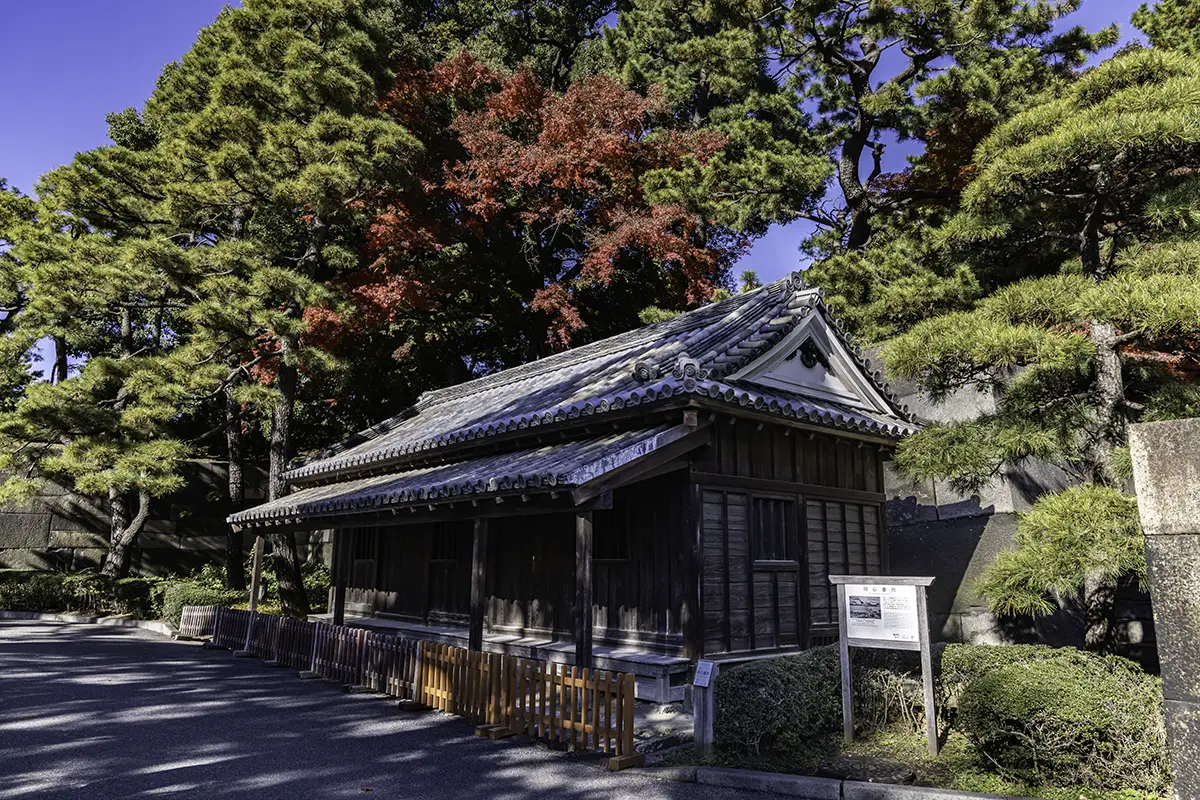
In this same area, keep an eye out for three guardhouses surviving from the days of the shoguns; they add a wonderful atmospheric touch to photos. If you need a break before starting your walk, there is a kiosk nearby.

The upper lawn: Edo Castle ruins
Past the guardhouses and up the hill lies the second area: the lawn. This is the central hub of the Imperial Palace East Gardens and the site of the Edo Castle donjon remains.

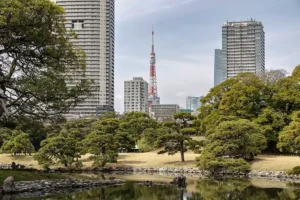
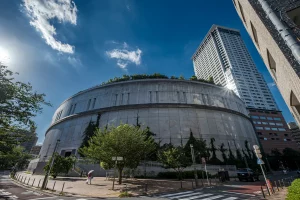
I highly recommend walking to the top of the stone foundation. From there, you get an arresting view of the Marunouchi district’s skyscrapers rising above the trees. In a way, the contrast reminds me of the view from Shinjuku Gyoen’s English Traditional Garden. Between the skyline and the colorful, mosaic-tiled Tokagakudo Concert Hall, the whole area is fantastic for photography. It is the perfect place to simply relax.
A brush with the 47 Ronin
Along the southern paths of the lawn lies a site of great historical weight: the Matsu-no-Oroka (The Great Pine Corridor). This was once a 50-meter corridor within the castle, famous for its pine tree motifs.

More importantly, this is where Daimyo Asano drew his sword against Kira Yoshinaka in 1701. That single event set into motion the legendary story of the 47 Ronin. Unfortunately, the corridor itself is gone, but a marker and a plaque providing the essential information remain. It is a quiet spot to pause and reflect on the past.

Ninomaru: The heart of the garden
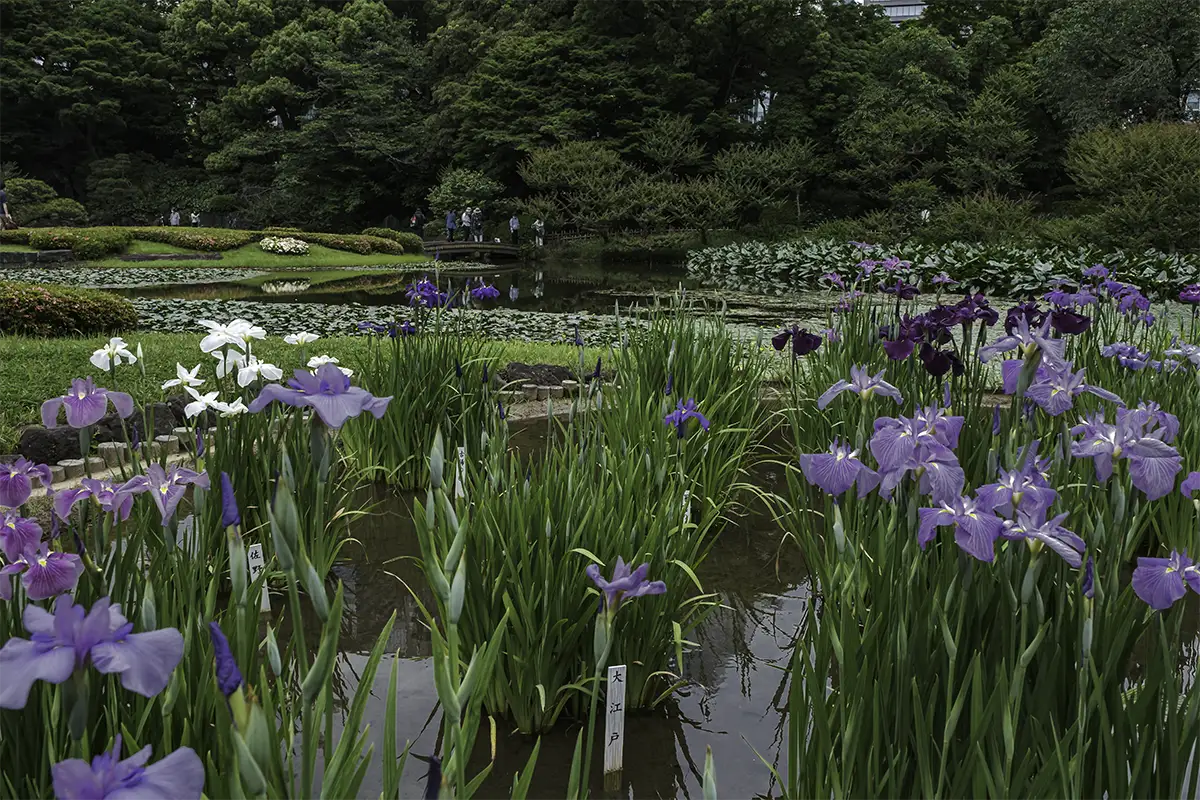
The third area, located at the bottom of the hill, is the Ninomaru. This section features a meticulously maintained garden, a pond, and representative trees from every Japanese prefecture.
Tucked away here is the elegant Suwana-no-chaya teahouse. While it isn’t open to the public, the exterior architecture makes for a lovely subject. Surrounded by walls and dense trees, the Ninomaru feels completely secluded from the city outside. To me, this is the true heart of the East Gardens. When the flowers are in bloom, the colors here are incredible.

A brief history of the gardens
During the post-war period, the government decided to create a new green space in Tokyo, utilizing the eastern portion of the Imperial Palace. Construction began in 1964, and the gardens were officially opened to the public on October 1, 1968. It has remained a beloved destination ever since; in 2019 alone, the gardens attracted more than three million visitors.

Why photographers love the Imperial Palace East Gardens
There is so much there to make anyone with a camera happy. It’s hard to make a definitive list, as there is much to see. Here are some of my favorites:
- The contrast: Views of the lawn and Marunouchi skyscrapers framed by the ancient donjon remains.
- The flora: Flowers blooming in (almost) every season.
- Architecture: The Fujimi Tower (though fenced off) and the Fujimi defense house.
- History: The marker for Matsu-no-Oroka and the 47 Ronin story.
- Cityscapes: The observation deck for views of the Marunouchi district.
Honest observations
A few notes for photographers:
- Fujimi defense house: This structure isn’t overly exciting, but you can go inside. Through the barred windows, you can catch a restricted glimpse of Inui-Dori (Inui Street) within the palace grounds. This street is only occasionally open to the public, so it’s a rare peek.
- The observation deck: Located behind the souvenir shop, this deck is a mixed bag. Yes, you can get some nice shots of the Marunouchi skyline over the trees. However, the foliage is so dense that you can’t see much of the ground level.
- Equipment: Tripods are not allowed, so plan accordingly.
Best time to visit
The Imperial Palace East Gardens are distinctly seasonal. No matter when you visit, there should be something of interest. But if I had to pick only one season, I would choose summer. Why? The lawn area comes alive with Satsuki Azalea blooms. Down in the Ninomaru, the Japanese irises are in full display. The color is everywhere, making for spectacular photos.

Nearby photo spots
Once you finish at the gardens, these locations are within easy walking distance:
Essential information
Address
- 1-1 Chiyoda, Chiyoda City, Tokyo
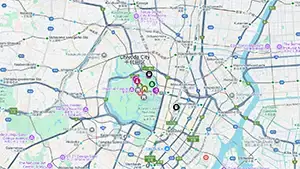
- Click on the image below to see the East Gardens on a Google map:
Train and subway access
- Otemachi Station (Exit C13a): 5-minute walk
- Takebashi Station (Exit 1a): 5-minute walk
- Nijubashi-mae Station (Exit 6): 10-minute walk
- JR Tokyo Station (Marunouchi North Exit): 15-minute walk
Opening hours
- March 1 – April 14: 9:00 a.m. – 5:00 p.m.
- April 15 – August 31: 9:00 a.m. – 6:00 p.m.
- September 1 – September 30: 9:00 a.m. – 5:00 p.m.
- October 1 – October 31: 9:00 a.m. – 4:30 p.m.
- November 1 – End of February: 9:00 a.m. – 4:00 p.m.
- Note: Admittance is allowed up to 30 minutes before closing time.
- For the most up-to-date information, consult the official Imperial Palace East Gardens website.
Closed days
- Mondays and Fridays.
- Exception: Open on national holidays (unless it is the Emperor’s Birthday).
- December 28th to January 3rd.
- Occasional closures for special palace events.
Admission
- Gardens: Free.
- Museum: ¥1,000.
Are the East Gardens worth it?
The Imperial Palace East Gardens are a gorgeous escape from the concrete jungle. Its rotation of seasonal flowers and the mix of architectural views will keep you entertained for hours, while history lovers will appreciate standing on the site where the 47 Ronin story began. Best of all, it puts you in the perfect position to explore the rest of Chiyoda. And by the way—don’t forget that art museum!

Rohan Gillett
Rohan has photographed Tokyo since 2011. He shoots it with his Canon EOS R5 these days. The project will take more than one lifetime to complete.