The Imperial Palace Winter Lights: A Photographer’s Guide

The air on Christmas Eve was sharp and cold, but a warm, golden light was spilling across the Tokyo Imperial Palace moat. While much of Tokyo was bustling with festive energy, here, a rare and peaceful spectacle was underway.


Many don’t realize that for a short period each winter, the Imperial Palace sheds its daytime austerity for a breathtaking nighttime glow. Last year, I joined a handful of other dedicated photographers to capture the magic.
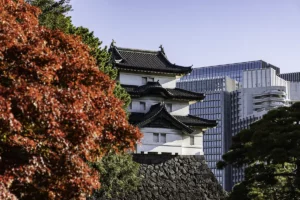
The illumination focuses on the eastern side of the palace grounds—the side facing Tokyo Station. The main subjects are the historic gates. They are Seimon, Sakashita, and Otemon, and the beautiful corner keeps (Fushimi, Fujimi, and Tatsumi).

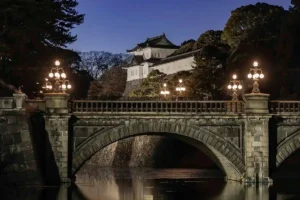
My first subject was the elegant Fushimi Keep. It was perfectly positioned to be framed with the famous Niju and Meganebashi (“Eyeglasses”) bridges. As the last bit of blue faded from the evening sky, the warm light on the white keep created a stunning contrast, its reflection shimmering in the dark moat below.

From there, I moved to the Otemon Gate. This gate is particularly special as it is the main entrance to the public East Gardens (Note: The gardens are typically closed on Mondays and Fridays). Seeing it lit up, with every detail of its stonework and massive wooden doors highlighted, felt like stepping back in time.

Imperial Palace winter lights shoot photo tips
To make the most of your visit, here are my key recommendations:
A tripod is non-negotiable
My biggest lesson from that first shoot was the absolute necessity of a tripod. While I managed to get handheld shots, a sturdy tripod is the only way to unlock those truly stunning long exposures. It’s what will allow you to render the moat’s water silky-smooth while keeping the palace architecture perfectly sharp. Trust me, it’s the one piece of gear you don’t want to leave behind.
Go beyond wide-angle
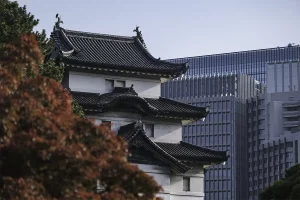
While a wide lens is great for the grand scene, bring a telephoto lens (70-200mm). With one of those, you can isolate details like the roof tiles on a keep or the texture of the stone walls.
Master the timing
The best light happens fast. Arrive well before sunset to scout your compositions in the daylight. This allows you to be ready to shoot through the Golden Hour and into the magical “Blue Hour”—that brief period after sunset when the deep blue sky creates a perfect backdrop for the golden lights. Continue shooting into the night to capture a full range of images.

My game plan for the next shoot
This winter, I’m planning a return trip, armed with these lessons. Capturing the reflections in the moat with a long exposure is a shot I won’t miss again.

Next winter, I’m planning a return trip, armed with these lessons. Capturing the reflections in the moat with a long exposure is a shot I won’t miss again. A tripod will be in my backpack for sure.
Rohan Gillett
Rohan has photographed Tokyo since 2011. He shoots it with his Canon EOS R5. The project will take more than one lifetime to complete.