Tokyo Station’s Domed Ceilings: A Photographer’s Guide

The domed ceilings of Tokyo Station sweep you back to an era of elegance and resilience. At first glance, they seem to be treasures of old-world grandeur, perfectly preserved for over a century. But their true story is even more compelling. These magnificent creations aren’t survivors, but glorious revivals.
Having been destroyed by war and rebuilt without their original flourish, the station’s iconic ceilings were painstakingly resurrected in 2012 to their pre-war design. They are a testament not only to timeless architecture but to a city’s dedication to reclaiming its history. So grab your wide-angle lens, because these beauties have a story to tell.
Several hundred million people use this station every year. How many have never looked up as they walked through the Marunouchi North and South gates? They are missing out on a great Tokyo photo spot.
A Brief History of Tokyo Station's Domes
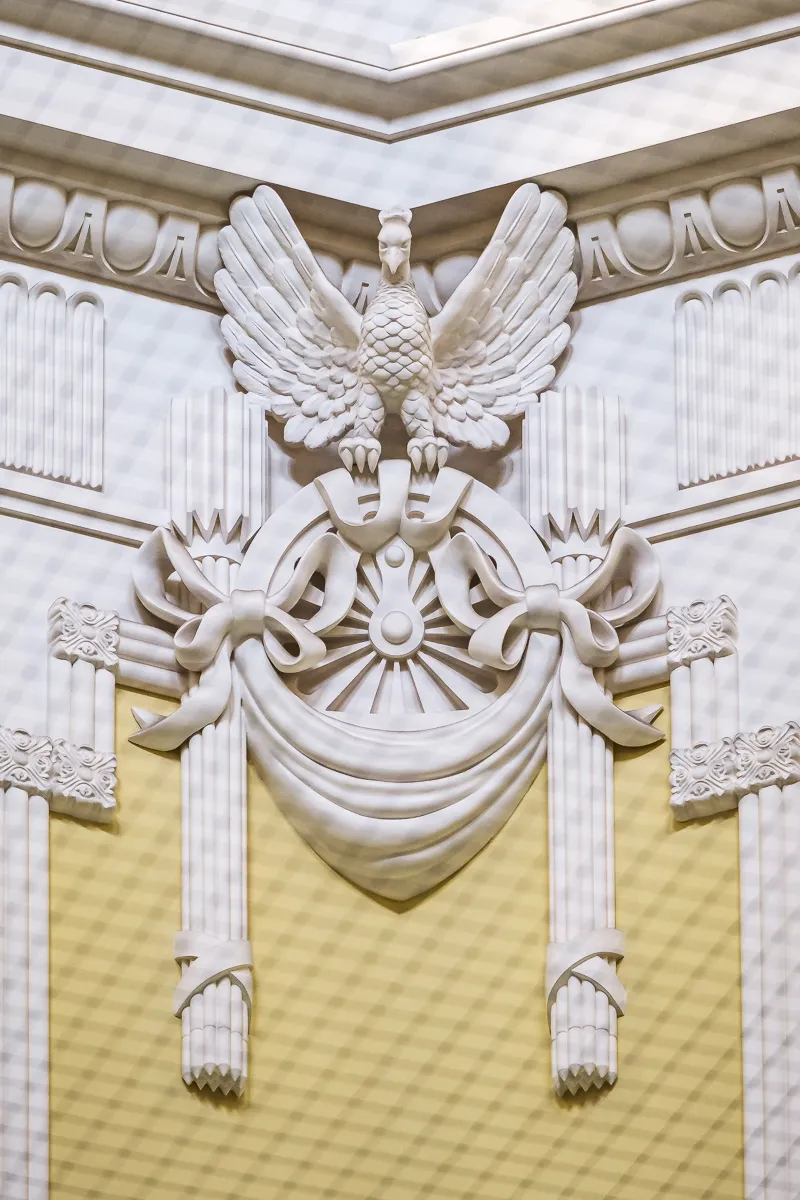
- Construction began and finished in 1914. Tatsuno Kingo, a prominent Japanese architect (and student of Josiah Conder), was responsible for the design. He used steel framing and red brick to create a building reminiscent of those in Europe.
- Only two gates were on the Marunouchi side of Tokyo Station when it opened. The North was the exit, and the South was the entrance. They gave a good view of the Imperial Palace’s walls.
- The sturdy steel framing, largely imported from England, enabled the structure to survive the devastating 1923 Great Kantō earthquake.
- WW2 bombings caused extensive damage. They were rebuilt at the end of the conflict but with a different design. Simple roofs replaced the domes.
- In 2007, reconstruction started and finished in 2012. The facade of the building was restored. Most importantly, the domes and their beautiful ceilings returned!
Where to find the Tokyo Station domed ceilings
The ceilings are above the Marunouchi north and south gates. They are about two hundred and twenty meters apart. Ignore the Marunouchi Central Exit. Don’t enter the station.
If you arrive at Tokyo Station by train, they are easy to find. Everything is well-marked, so keep your eyes open and follow the signs. If you’re outside, walk around the building until you are on the west side.
Here they are on a Google map:
Architectural details to look for
The ceilings are gorgeous and (usually) well-lit. So, even though they are high, you can see details. What is there exactly?
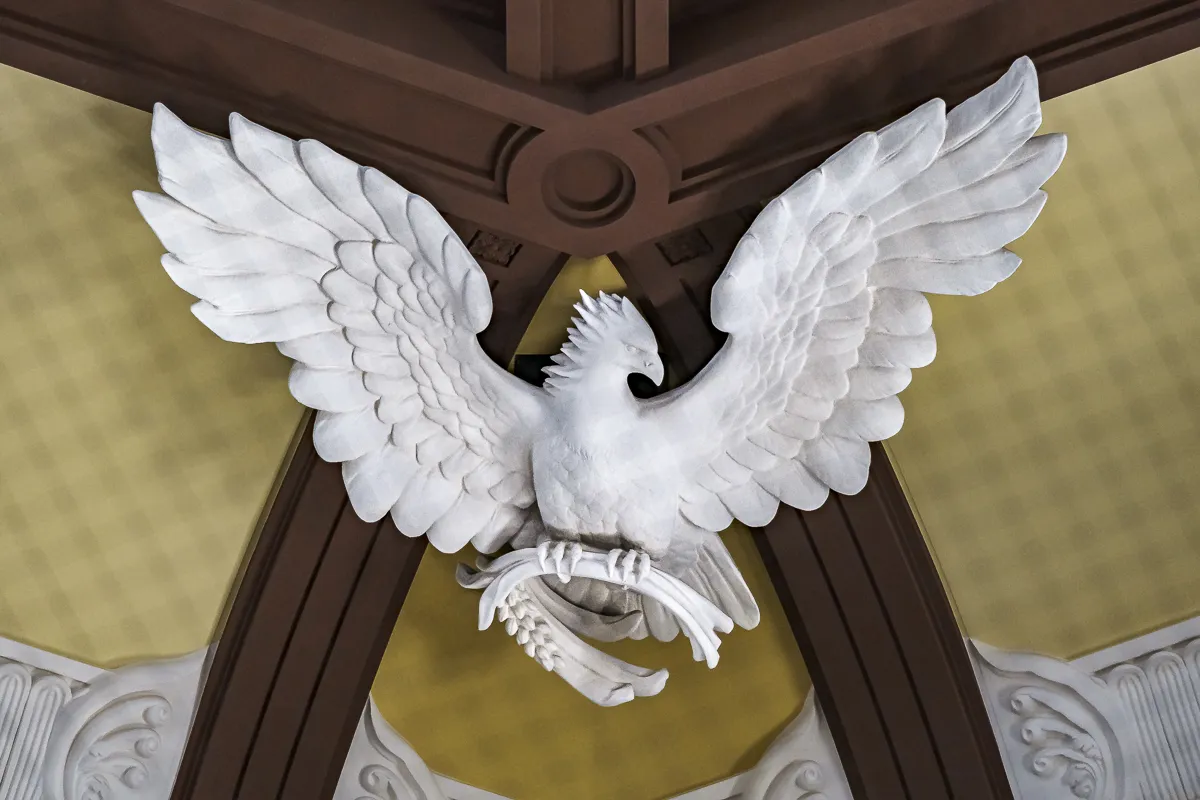
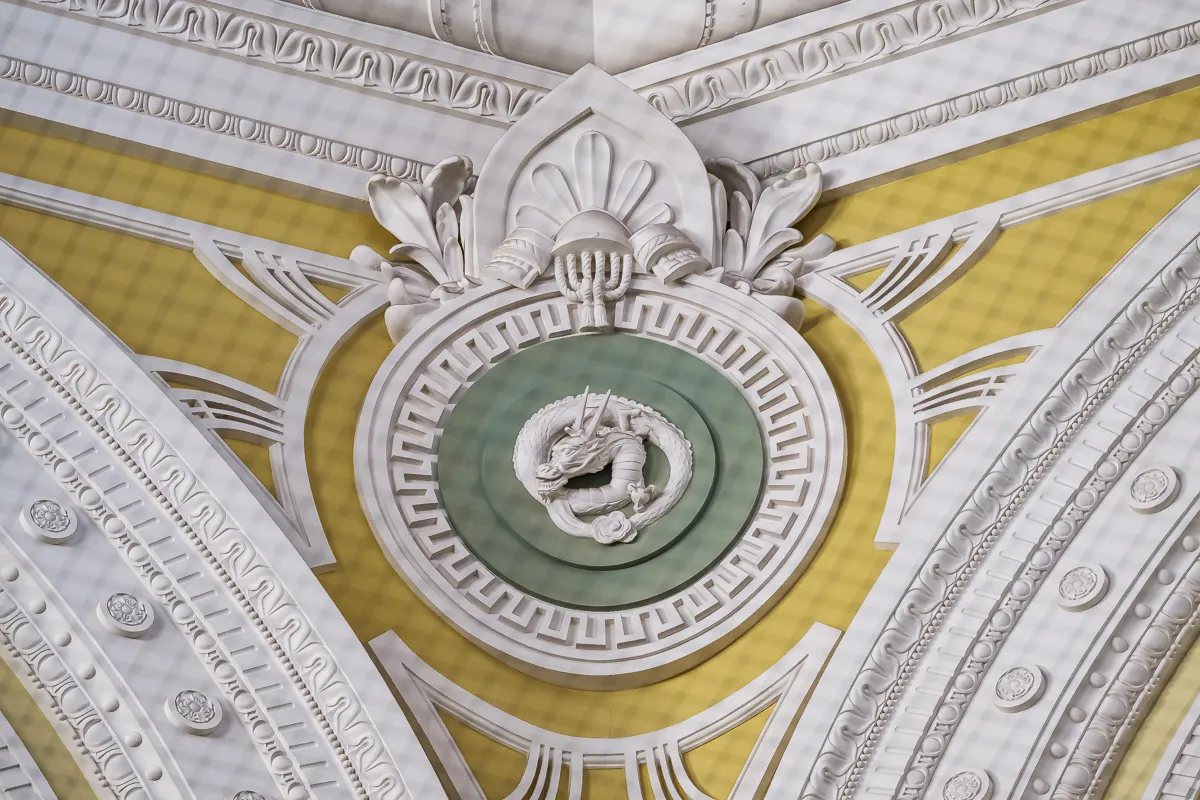
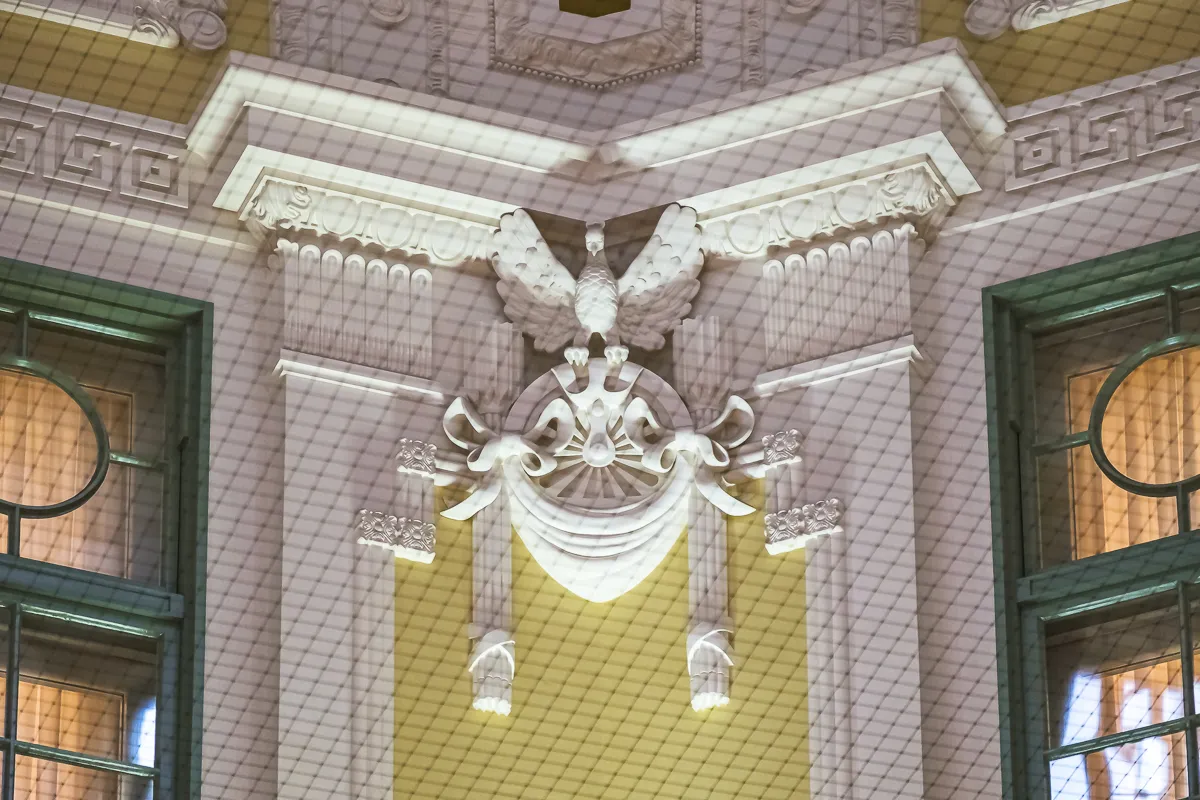
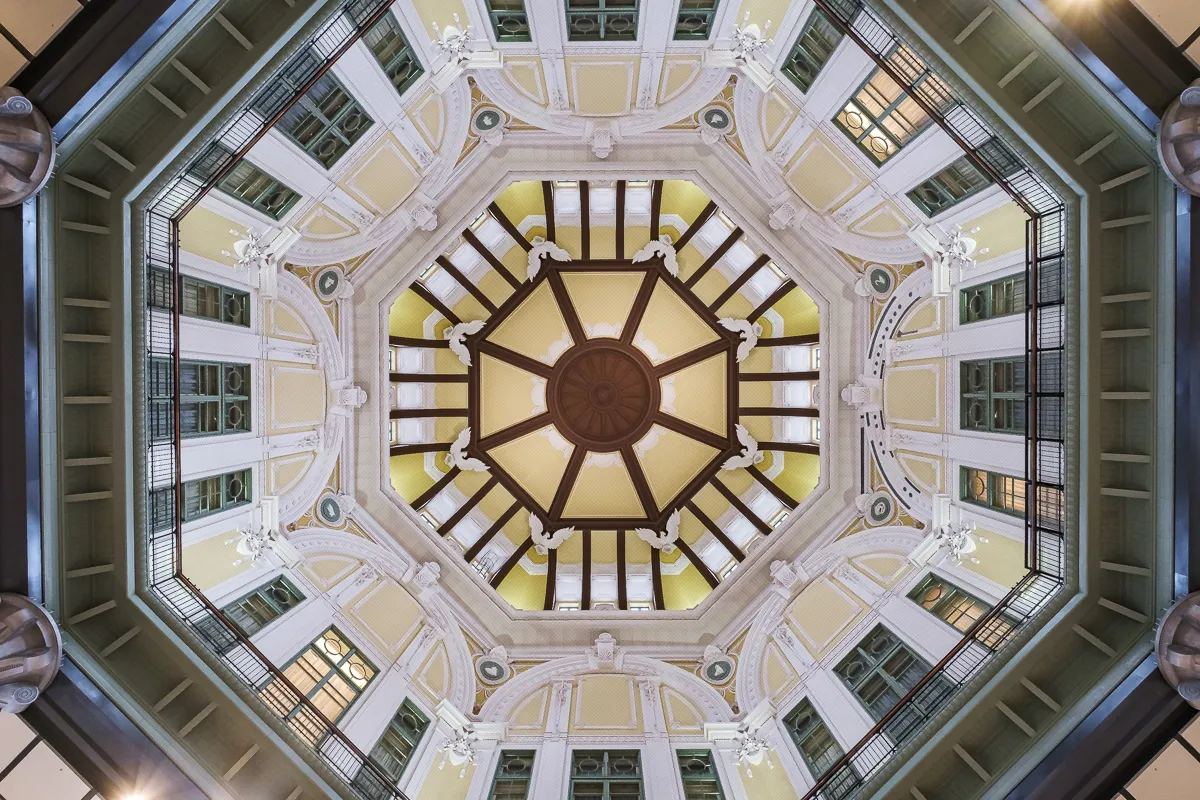
Eagles, looking to the left, are in the octagon-shaped ceiling spaces, like the original. Under them are eight of the twelve animals of the Chinese zodiac.
The Zodiac animal mystery
So why only eight of the twelve? The missing animals—the Rat, Rabbit, Horse, and Rooster—represent the cardinal directions (North, East, South, West) and were omitted from the octagonal design.
The eight animals you can see are those associated with the intermediate directions: ox (north-northeast), Tiger (east-northeast), dragon (east-southeast), snake (south-southeast), monkey (west-southwest), dog (west-northwest), and boar (north-northwest).
Another fascinating detail from the reconstruction is the incorporation of original relief work found within the old domes. After being carefully reinforced with advanced chemical compounds, these historical fragments were seamlessly integrated, with breathtaking results.
Photography tips
- The key to a great shot of the domes is symmetry. For the best results, stand directly under the center of the ceiling and point your camera straight up. Use gridlines in its viewfinder or on the screen to line up the architectural elements perfectly.
- These ceilings are perfect subjects for a rainy day in Tokyo. If the weather has you stuck indoors, this is a beautiful and accessible photo opportunity.
Lens choices
- At first glance, wide angles might be best. With my Fujifilm 10-24 mm, the width of the ceiling just fits in the frame.
- If you want to focus on small details like the animals of the Zodiac, you need something long. I used the Fujifilm 100-400 mm for these photos, but it was a little overkill! A Fujifilm (crop sensor) 55-200mm should be enough.
More photo spots near Tokyo Station
- Hibiya Park (famous for its many flowers)
- Imperial Palace (home to Japan’s Emperor)
- Kite Museum (one of Japan’s traditional pastimes)
Conclusion
Tokyo Station is often the first stop for visitors, but it shouldn’t just be a place to catch a train. Between the hidden zodiac animals and the perfectly symmetrical geometry of the domes, it is one of the most rewarding architectural subjects in the city. So, pack both your wide-angle and your telephoto lens, keep your gridlines on, and make sure to visit both the North and South gates to get the full experience. Once you’ve filled your memory card, the historic Wadakura Fountain Park is just a short walk away to continue your Tokyo photo tour.
Frequently Asked Questions for the Domed Ceilings
Are the Tokyo Station domes free to see?
Yes, the domes are located in the public areas of the Marunouchi North and South gates and are completely free to view without entering the ticketed station area.
What is the best time to photograph the ceilings?
Midday offers bright, even light, but the domes are well-lit and can be photographed any time of day. To avoid crowds, try visiting on a weekday morning. You could also try late at night when fewer people are around.
Why are there only 8 zodiac animals on the ceiling?
The design omits the four animals representing the cardinal directions (Rat, Rabbit, Horse, Rooster), choosing to feature only the eight animals associated with the intermediate directions in the octagonal space.

Rohan Gillett
Rohan has photographed Tokyo since 2011. He shoots it with his Canon EOS R5. The project will take more than one lifetime to complete.