
Hatoyama Hall: Where Politics Met Stained-Glass Beauty

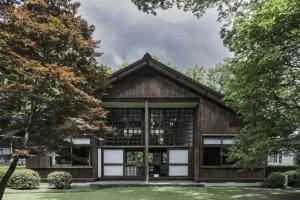
Beyond Tokyo’s neon-lit streets and skyscrapers is a pocket of history and architecture. It is Hatoyama Hall, also known as “Otowa Palace.” This Western-style mansion offers a glimpse into early 20th-century Japan. One of its political families even called it home.

Ichirō Hatoyama, a former Prime Minister of Japan, built Hatoyama Hall in 1924. The building is a remarkable example of early Showa-era Western architecture. Shinichirō Okada, the designer of the Kabuki-za, was the architect.

The architecture and rooms of Hatoyama Hall

The famous stained-glass pigeons

The interior stars are exquisite stained-glass windows. Many feature pigeons that symbolize peace and Hatoyama’s political philosophy of fraternity. The most iconic piece has the birds soaring over a pagoda.

Reception, dining, sun room, and living quarters

Wander through the mansion’s living quarters, starting with the reception rooms adorned with elegant chandeliers where political discussions were held. Imagine the formal dinners and strategic conversations that took place in the dining room, where a vintage television adds a touch of modern history. The bright sun room offers perfect garden views, while the bedrooms provide a personal look into the family’s life.

Ichiro Hatoyama Statue
Ichiro Hatoyama.

Each room tells a story. They showcase a blend of Art Deco, baroque, and classical influences. The result reflected the era’s embrace of Western design while retaining Japanese sensibility.

The gardens of Hatoyama Hall: A seasonal oasis

Outside the rose season, the manicured lawns, trees, and seasonal flowers offer a backdrop for the historic building. Statues add another layer to the Hatoyama family history. They occupy prominent positions in the garden.

Outside the rose season, the manicured lawns, trees, and seasonal flowers offer a backdrop for the historic building. Statues add another layer of Hatoyama family history. They occupy prominent positions in the garden.

The political legacy of the Hatoyama family

Hatoyama Hall isn’t just a pretty building; it’s steeped in political history. Ichirō Hatoyama played a significant role in post-war Japanese politics. He served as Prime Minister from 1954 to 1956. His grandson, Yukio, also served in the highest position. The house is a testament to their legacy and the changing tides of Japanese democracy.

Planning your visit to Hatoyama Hall

Opening Hours and Admission Fees

  • 10:00 a.m. to 4:00 p.m. (last admission 3:30 p.m.). 
  • Closed on Mondays (or the following Tuesday, if Monday is a public holiday). Check the official website for any changes.
  • ¥800 for adults.

How to get there

Edogawabashi and Gokokuji Stations are close. Both are on the Tokyo Metro Yurakucho Line and about a ten-minute walk.

Here it is on a Google map:

Visitor tips and photography rules

  • Allowed inside without flash.
  • Not permitted in the library and the tatami room.
  • Photos not allowed signs are in many places, which is problematic.
  • The path to the house from the road is long and steep. Luckily, a rest area complete with an ashtray is halfway up.
  • Take off your shoes to enter the tatami room on the second floor. This is only written in Japanese at the entrance.
  • Time to Allow: Plan for 1 to 1.5 hours to explore the house and gardens comfortably.

The most current hours and up-to-date information are on the official Hatoyama Hall website.

Nearby attractions and photo spots

Is Hatoyama Hall worth visiting?

Hatoyama Hall appeals to history buffs, architecture enthusiasts, and those seeking something unique. This serene, beautiful, and thought-provoking destination offers a different perspective on Japan’s rich past.

Have you discovered any hidden gems like Hatoyama Hall in your travels? Share your thoughts and experiences in the comments below! For this article, we have a challenge for you. Remember those stained glass windows with the pigeons? What’s the Japanese word for the birds? Tell us the answer.

Picture of Rohan Gillett
Rohan Gillett

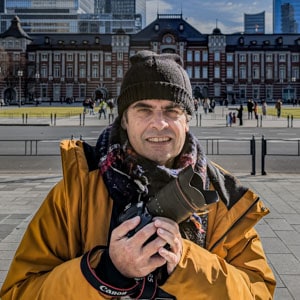
Rohan has photographed Tokyo since 2011. He shoots it with his Canon EOS R5. The project will take more than one lifetime to complete.

More building articles

Edo-Tokyo Open Air Architectural Museum old house
Why visit the Edo-Tokyo Open Air Architectural Museum?

Journey into Japan’s architectural past at the Edo-Tokyo Open Air Architectural Museum. This unique space offers a remarkable opportunity to photograph a wide array of preserved Japanese buildings. You can see everything, from an Edo-period mausoleum to the humble charm of historic homes. A glimpse into Japan’s history The Edo-Tokyo

Read More »
Tokyo International Forum exterior
Tokyo International Forum: A photographer’s guide

Tokyo International Forum. It was a classic photographer’s dilemma: my original plan to shoot Yushima Tenjin’s famous plum blossoms was a bust, as the flowers were weeks from blooming. Scrambling for a new subject in a city full of icons, I landed on a place I’d never considered before: the

Read More »
A sprawling cityscape in the foreground with a snow-capped Mount Fuji rising above a mountain range in the distance.
A Guide to the Tokyo Metropolitan Government Building Observatory

Mount Fuji is the southwest (taken with a 55-200 mm lens). Discover Tokyo’s top free observatory at the Tokyo Metropolitan Government Building. Offering stunning city views from 243 meters, it’s the perfect spot to witness Mount Fuji at sunset or experience the building’s transformation through record-breaking digital art projections. This

Read More »
Marunouchi North Exit Tokyo Station domed ceiling
Tokyo Station’s Domed Ceilings: A Photographer’s Guide

Marunouchi north exit dome. The domed ceilings of Tokyo Station sweep you back to an era of elegance and resilience. At first glance, they seem to be treasures of old-world grandeur, perfectly preserved for over a century. But their true story is even more compelling. These magnificent creations aren’t survivors,

Read More »