
A Long-Term Review: The Fujinon XF 16-55mm f/2.8 Workhorse

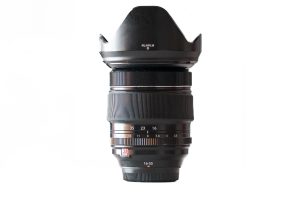
Fujinon XF 16-55mm f2.8 R LM WR lens

If one lens ruled them all, it would be the Fujinon XF 16-55mm f/2.8 R LM WR.

For the seven years I shot with Fujifilm (2017-2024), this was my most-used and favorite lens. I took countless thousands of pictures with it, and many of the photos on this blog were born from its glass. While not perfect, it comes closer than most.

I’m reviewing this lens as a non-technical shooter—I learned by doing, not by studying. My file type of choice is RAW; I can’t remember the last time I even considered shooting a JPEG.

In early 2017, after seeing images from the Fujinon XF 16-55mm across various websites, I knew it was for me. Its versatile focal range makes it a true workhorse, ready anything.

Image quality: Simply stunning

The image quality this lens produces is beyond amazing. When you see the pictures, you understand why it has some heft to it. It feels like Fujifilm made no compromises on the optics; a lighter lens would have likely meant a sacrifice in quality, and the stunning results speak for themselves.

Build and handling

This lens is built to last. It contains a lot of metal, and while some parts like the zoom ring are high-quality plastic, the entire package feels solid and reassuring in the hand.

The aperture ring is a classic experience, with clicks at each third-stop from f/2.8 to f/22. Like other modern Fuji lenses, the manual focus is fly-by-wire, meaning the ring is electronically controlled. The focus scale is displayed inside the viewfinder or on the rear screen.

Performance in the field

The 16-55 uses a twin linear motor for autofocus, which is both fast and silent. I found its focusing to be confident and reliable in everything from bright daylight to low-light street photography at night. As you’d expect from a top-tier Fujinon lens, the contrast and color rendition are superb.

Regarding sharpness, this lens is phenomenal. If it were any sharper, it might cut your eyeballs! Photos at 16mm might be a hair sharper than at 55mm, but the difference is negligible in real-world use.

Technical imperfections are extremely well-controlled. Vignetting is minimal and easily corrected. The advanced coatings do a fantastic job of reducing ghosting and flaring, and chromatic aberration is practically a non-issue.

Technical specifications

  • Mount Type: Fujifilm X
  • Focal Length: 16-55 mm
  • Lens construction (elements/groups): 17/12
  • Angle of view: 83.2 – 29°
  • Number of diaphragm blades: 9
  • Maximum aperture: f/2.8
  • Minimum aperture: f/22
  • Minimum focus distance: 30 cm
  • Max magnification: 0.16 x (telephoto)
  • Weight (with no cap): 655 g
  • Dimensions: 83.3 mm x 106.0 mm (wide) / 129.5 mm (telephoto)
  • Filter size: 77 mm
  • Stabilization: No
  • Weather resistant: Yes

The not-so-perfect: Potential downsides

  • No lens is perfect, and the 16-55mm has a few well-known trade-offs:
  • Weight: At 655 grams, it’s a heavy lens for a mirrorless system and can make smaller camera bodies feel front-heavy.
  • No Stabilization: The lack of in-lens stabilization might be a dealbreaker for some, though this is less of an issue on newer Fuji bodies with IBIS (like the X-T4 or X-H series).
  • Price: A new copy will set you back over US$1000, placing it in the premium category.
  • Bokeh: While generally pleasant, the out-of-focus rendering can sometimes look a little busy or like “onions,” which is a common critique.
  • For me, the image quality far outweighed these cons. The moment I saw my first results, I knew it was a keeper.

So, why did I switch?

If this lens is so good, why did I move on from Fujifilm? The decision wasn’t about a flaw in this lens or that camera system, but rather an evolution in my own photographic needs. I found that Canon was a better fit for the next phase of my photography.

However, that doesn’t change my opinion that for a huge range of photographic work, the XF 16-55mm is a top-tier, professional workhorse.

Conclusion

Even though I’m no longer a Fuji shooter, I can say without reservation that this lens produces incredible image quality. If you are committed to the Fuji X-system and want the best standard zoom available, this is an absolutely outstanding choice for making great pictures.

What’s your favorite lens? Tell us about it in the comments.

Picture of Rohan Gillett
Rohan Gillett

Rohan has photographed Tokyo since 2011. He shoots it with his Canon EOS R5. There are no plans to stop.

More review articles

Fujinon XF 16-55mm f2.8 R LM WR lens
A Long-Term Review: The Fujinon XF 16-55mm f/2.8 Workhorse

After seven years of constant use, the Fuji XF 16-55mm f/2.8 remains a favorite lens. This long-term review covers its stunning image quality, professional build, and the real-world cons like weight and price. An honest verdict, even after I’ve switched to a different camera system.

Read More »

External Fujinon XF 16-55mm reviews

2 Responses

    1. Sorry for the slow reply David. I didn’t see your comment until tonight. If I could afford the X-T5 I’d buy it with no hesitation. That seems to be a nice camera. If I can find a little extra work, that might happen. But if it doesn’t that’s okay because the X-T3 is still good enough.

Leave a Reply

Your email address will not be published. Required fields are marked *