Masashige Kusunoki: The Imperial Palace Samurai Statue Story
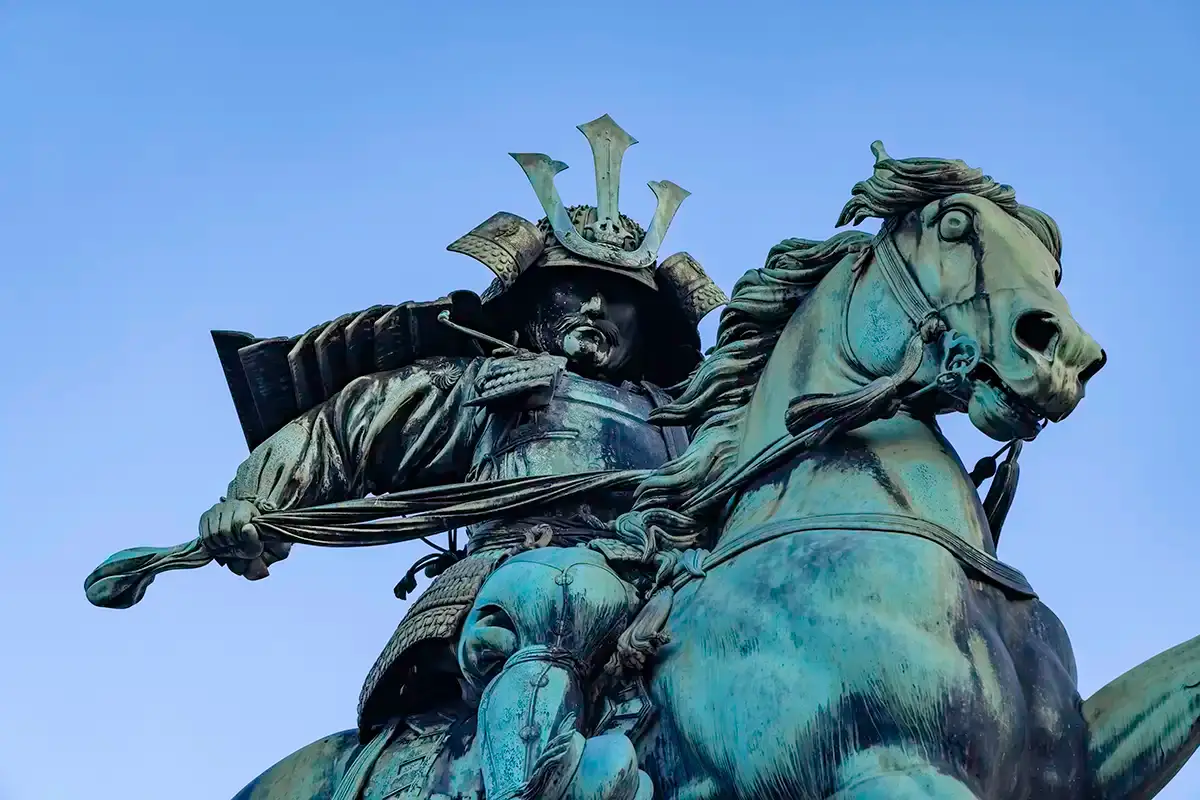
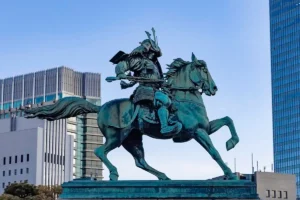
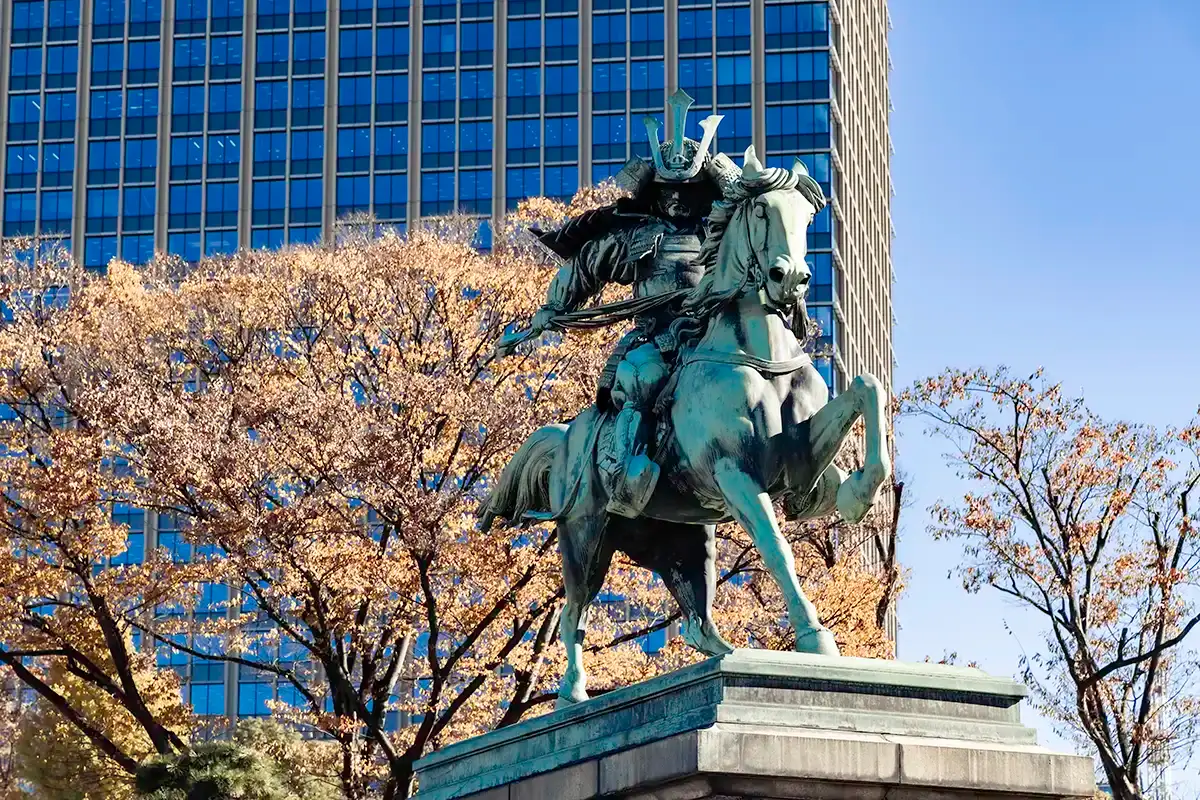
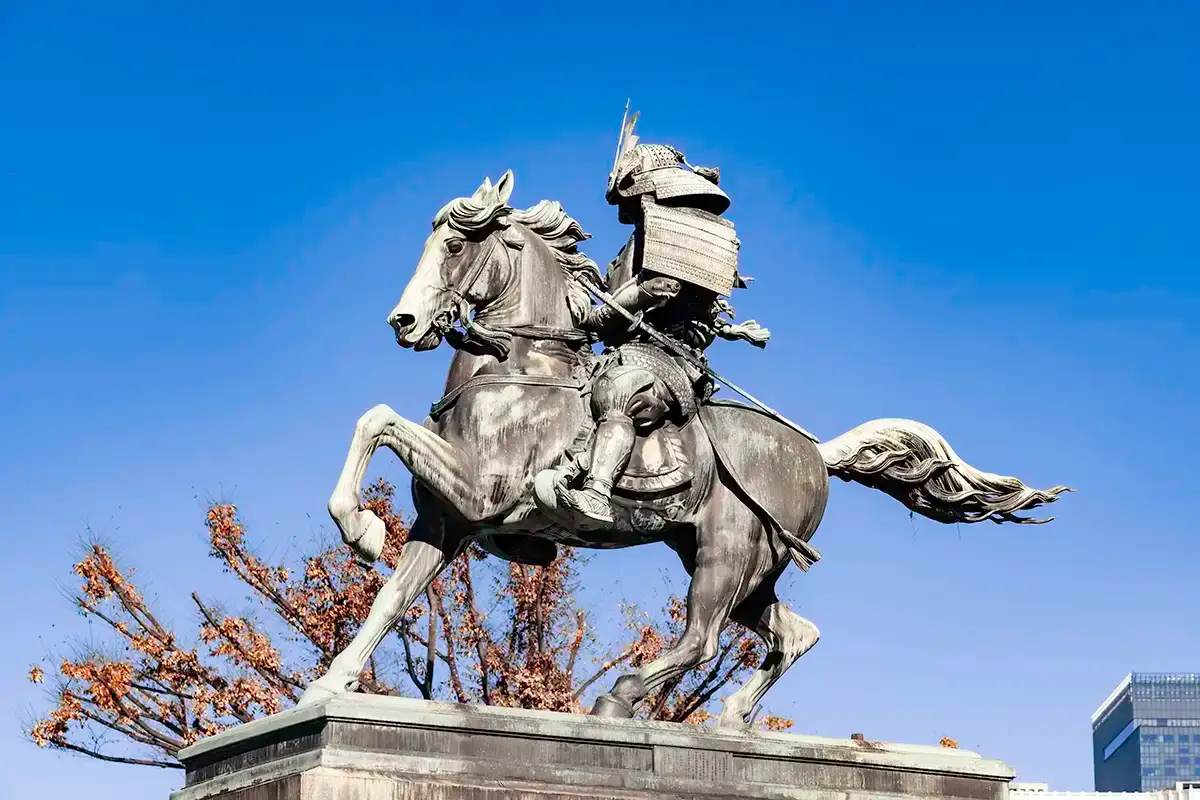
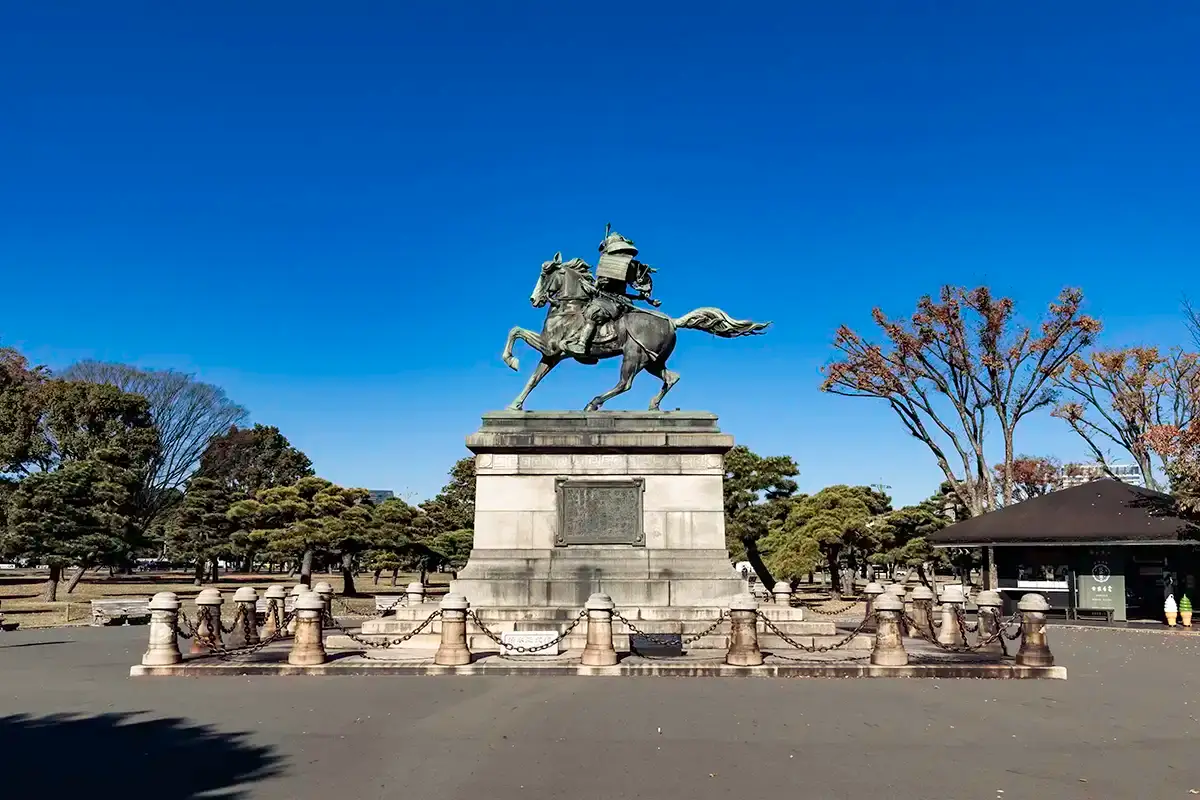
Standing guard in the Outer Gardens of Tokyo Imperial Palace is a towering bronze samurai on horseback. Most visitors snap a quick photo and move on, but who was this man, immortalized in the heart of the city? The first time I saw this statue, I did the same. But the heroic figure stuck with me, and I had to know his story. He is Masashige Kusunoki, a 14th-century samurai whose life is a dramatic tale of loyalty, strategy, and sacrifice. His legacy is far more complex than it first appears.
About Masashige Kusunoki: Japan’s most loyal samurai
Masashige (1294 – 1336) was a fourteenth-century samurai. He came from a wealthy family and was a scholar and a devout Buddhist. On top of that, he was courageous and loyal to the emperor. That wasn’t uncommon at the time, so why was he special?
During his lifetime, the Kamakura shogunate ruled Japan, but Emperor Go-Daigo sought to restore true imperial power to the throne. According to legend, he had a dream when sleeping under a camphor tree (in Japanese, “Kusunoki”). The dream was considered a divine omen pointing to Masashige, who soon found himself appointed as a loyalist general.
Luckily, he was a brilliant tactician and strategist. He defended two fortresses, Akasaka and Chihaya. That allowed Go-Daigo to return to power for a brief time. He rewarded Masashige for his efforts. The emperor gave him the governorship of Settsu and Kawachi Provinces (near Osaka). He also received court promotions and awards. That’s where it ended.
Things didn’t go well. Some of Go-Daigo’s followers were discontented with his rule. They wished to return to the way things were in the Heian period. One of them was the samurai Takauji Ashikaga. He raised an army supported by another branch of the Imperial line. The Genkō war started.
For the loyalists, it was a disaster. Go-Daigo ignored Kusunoki’s military advice. The two forces engaged each other near Kobe at the Battle of Minatogawa. Masashige was on the losing side and died. After the battle, his head was taken and sent to Kanshin-Ji (temple) for burial. The new court branded him a traitor. It is no surprise he dropped out of history for a time!
Things change, though. Neo-Confucian theories influenced scholars and samurai with new ideas during the Edo period. They created a new legend. He now epitomized loyalty, courage, and devotion to the emperor. In 1871, he was enshrined at Minatogawa Shrine. Masashige, even in death, became a tool of the state.
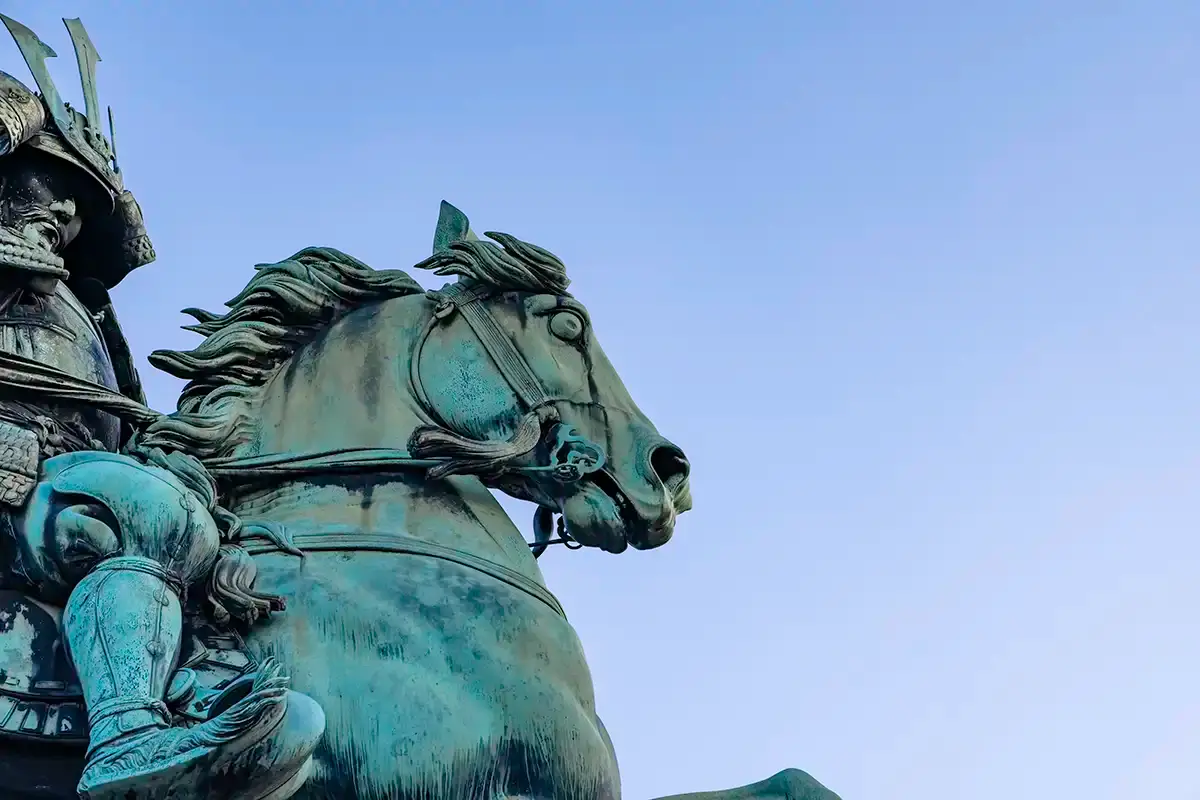
Things change, though. Neo-Confucian theories influenced scholars and samurai with new ideas during the Edo period. They created a new legend. He now epitomized loyalty, courage, and devotion to the emperor. In 1871 he was enshrined at Minatogawa Shrine. Masashige, even in death, became a tool of the state.
During World War II, the kamikaze revered him. They thought he had all the virtues they should have – loyalty, courage, and devotion. And like him, they died for an Emperor.
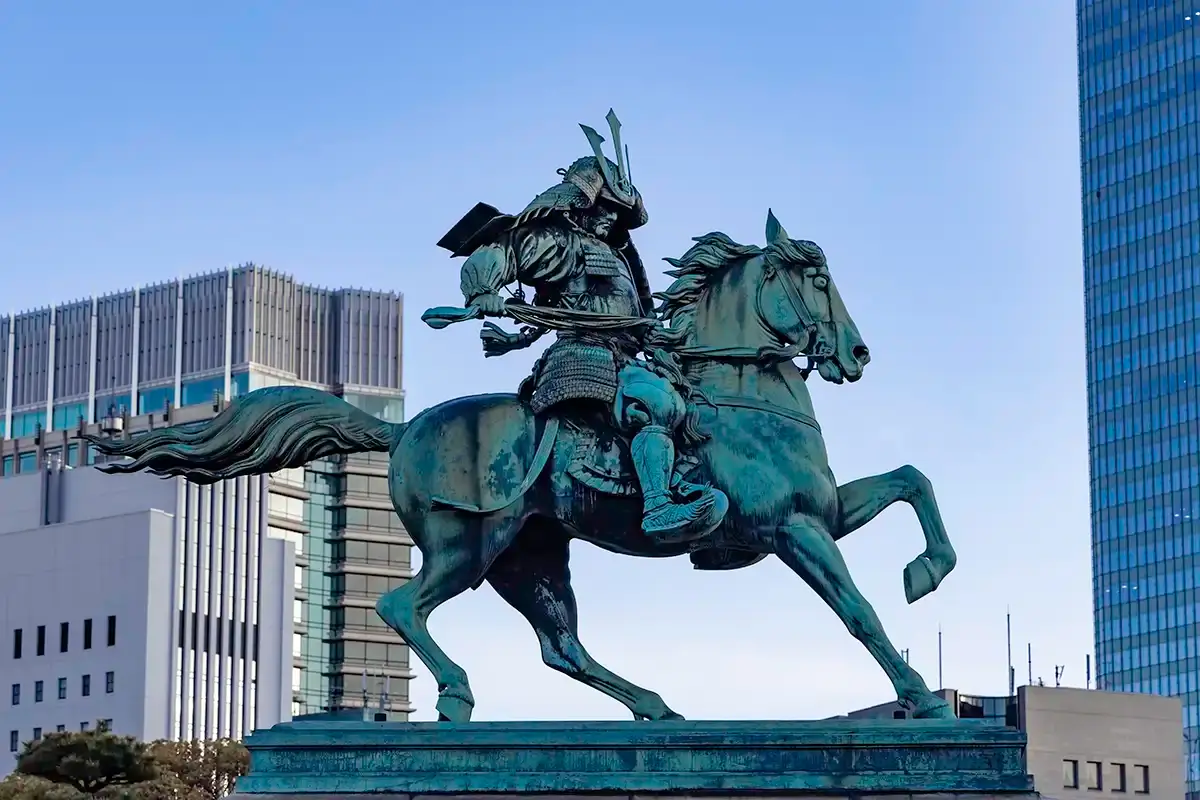
How did the traitor get a statue at the Imperial Palace?
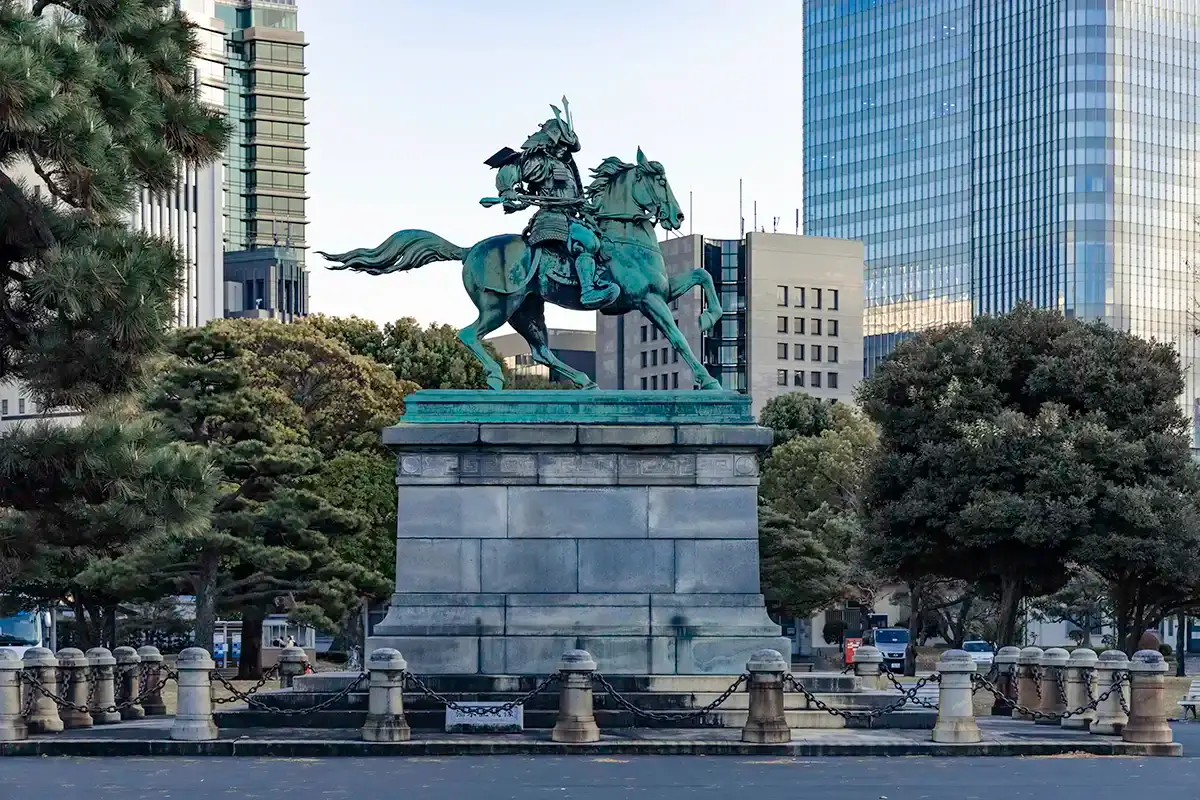
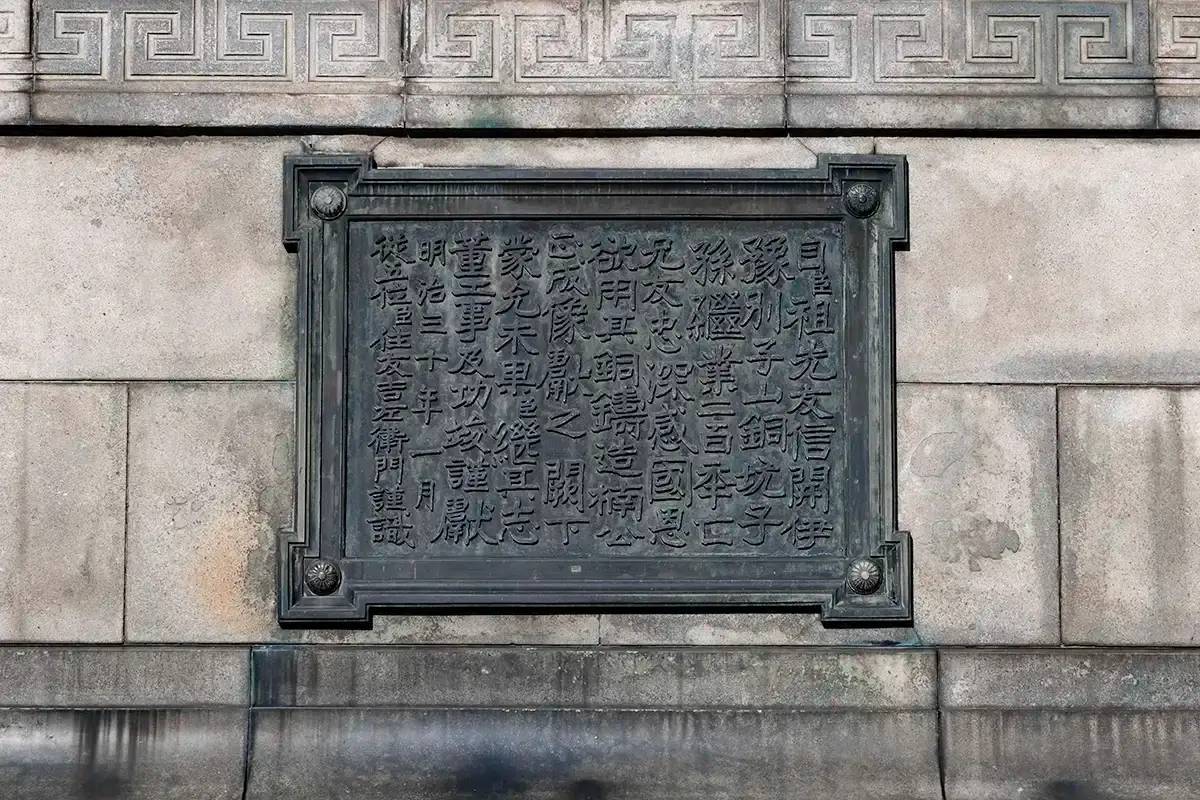
As Japan became increasingly militaristic in the late 19th and early 20th centuries, the state needed new symbols of patriotism and loyalty to the Emperor. What could be better than a samurai who died defending one? Seizing on this need, the Sumitomo corporation commissioned and presented the statue to the Imperial Household to commemorate the bicentenary of their Besshi Copper Mines. It was erected near Nijubashi Bridge in 1900.
Tips for photographing the statue
- Benches surround the statue. And a toilet block is nearby. Keep that in mind when planning your pictures.
- Being in a park and up on a pedestal, it is straightforward to photograph. I suggest going there late afternoon as the sun should light the statue’s face. The window of opportunity will be short in winter.
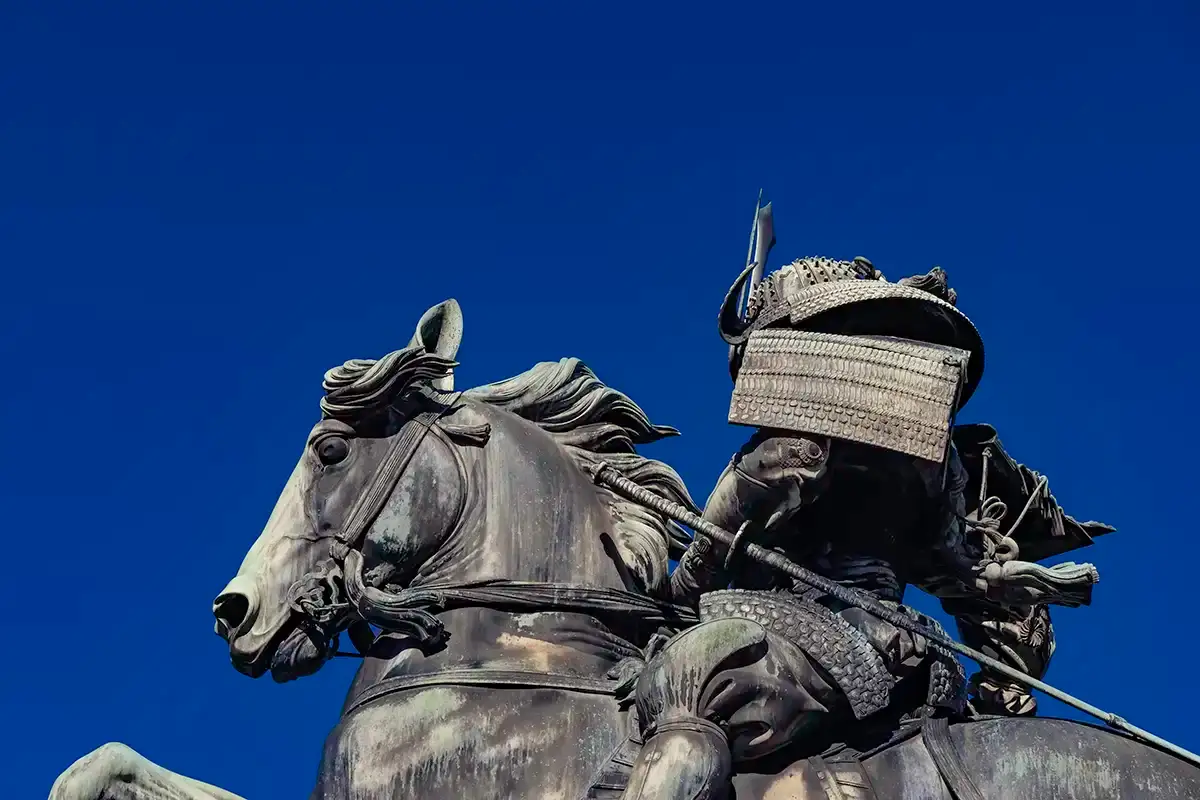
- The head is high off the ground, so if you want to capture details, you’ll need a zoom like a 100 to 200 mm lens. Of course, for those with shorter lenses, crop your photos.
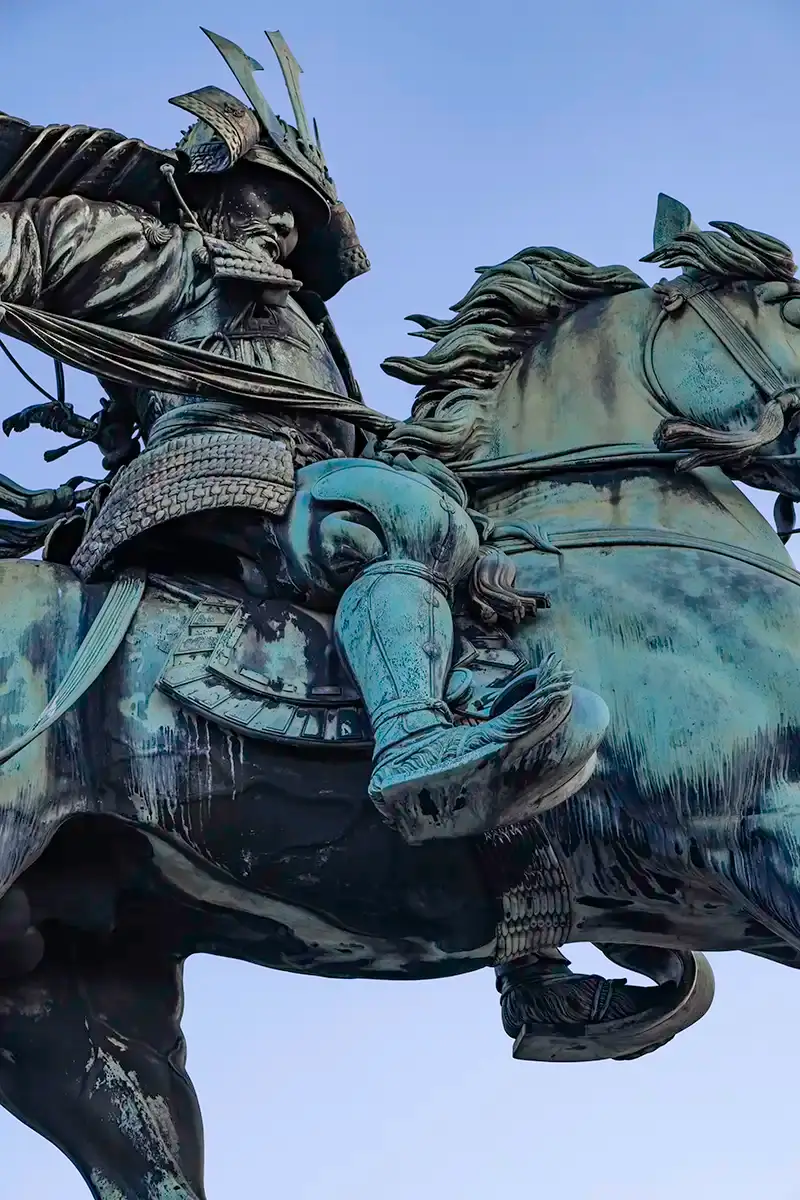
- The statue’s intricate armor, with its many overlapping plates and tassels, creates deep and dramatic shadows. For those who want more darkness in their photos, that is great! If you don’t, you will have to deal with them in post-processing. Bracketing or a long exposure might be helpful too.
- Trees surround the statue. Shadows will come into play earlier if you shoot there in the afternoon. That is another thing to keep in mind.
Kusunoki Masashige statue access & visitor info
Where is it?
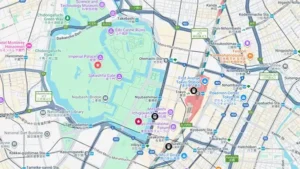
Address: 1-1 Kokyogaien, Chiyoda City, Tokyo
The statue is in the Kokyo Gaien (Outer Gardens of the Imperial Palace). Don’t confuse that park with the East Gardens which is also near the palace.
Click the image below to see the statue on Google Maps:
Closest train stations
- Hibiya Station on the Toei Mita and Tokyo Metro Chiyoda and Hibiya Lines.
- Yurakucho Station on the Keihin-Tohoku and Yamanote Lines.
Opening hours
The statue is in a park, so you can go whenever you like. It is open twenty-four hours a day.
Admission costs
None.
Public restrooms
Available.
The legacy of the "Seven Lives" samurai
The famous words, “Would that I have seven lives for my country”, are attributed to Kusunoki and his brother shortly before they were killed in battle. They were rehabilitated in the late 19th century to become tools of the new state. It makes one wonder if Kusunoki and his horse are a silent reminder to modern Japan. Are they calling for the same spirit of devotion and resilience to face the challenges of the 21st century? If you want to read more about the statue’s history, read this article on the Sumitomo Group Public Affairs Committee website.
Rohan Gillett
Rohan has photographed Tokyo since 2011. He shoots it with his Canon EOS R5. The project will take more than one lifetime to complete.