
Shibuya’s Mikoshi Parade: A Photo Diary from Dogenzaka

The Shibuya Konno Hachimangū Festival is one of Shibuya’s largest and most vibrant annual events. It is a deeply rooted Shinto tradition that prays for a bountiful harvest, prosperity, and the well-being of the local community. Held every autumn at the historic Konno Hachimangū Shrine, the festival transforms the heart of the area into a showcase of traditional Japanese culture. For several days, the shrine grounds are bustling with a variety of events, from sacred rituals to lively entertainment.

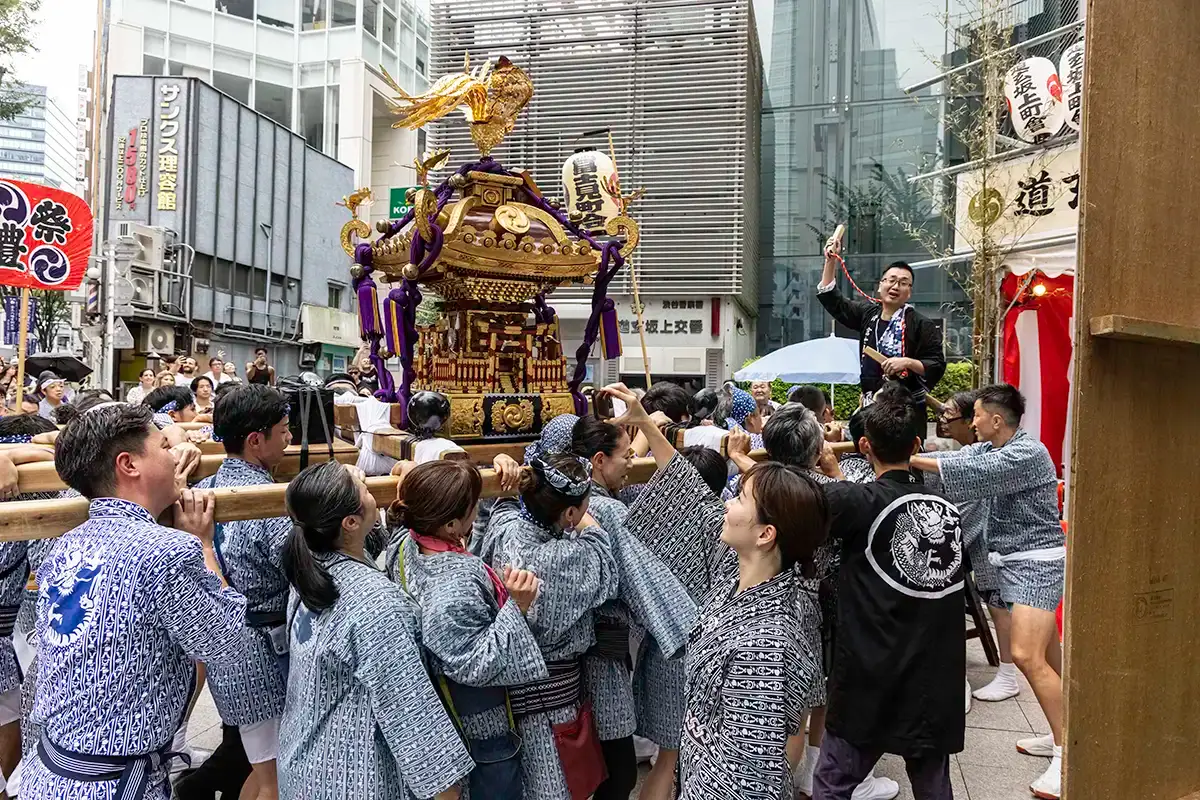
One of the festival’s most visually stunning events is the mikoshi parade. While I didn’t make it to the shrine for the main festivities in 2025, I did photograph the procession. It offered a unique opportunity for Japanese festival photography.

A spectacle of tradition: The mikoshi parade

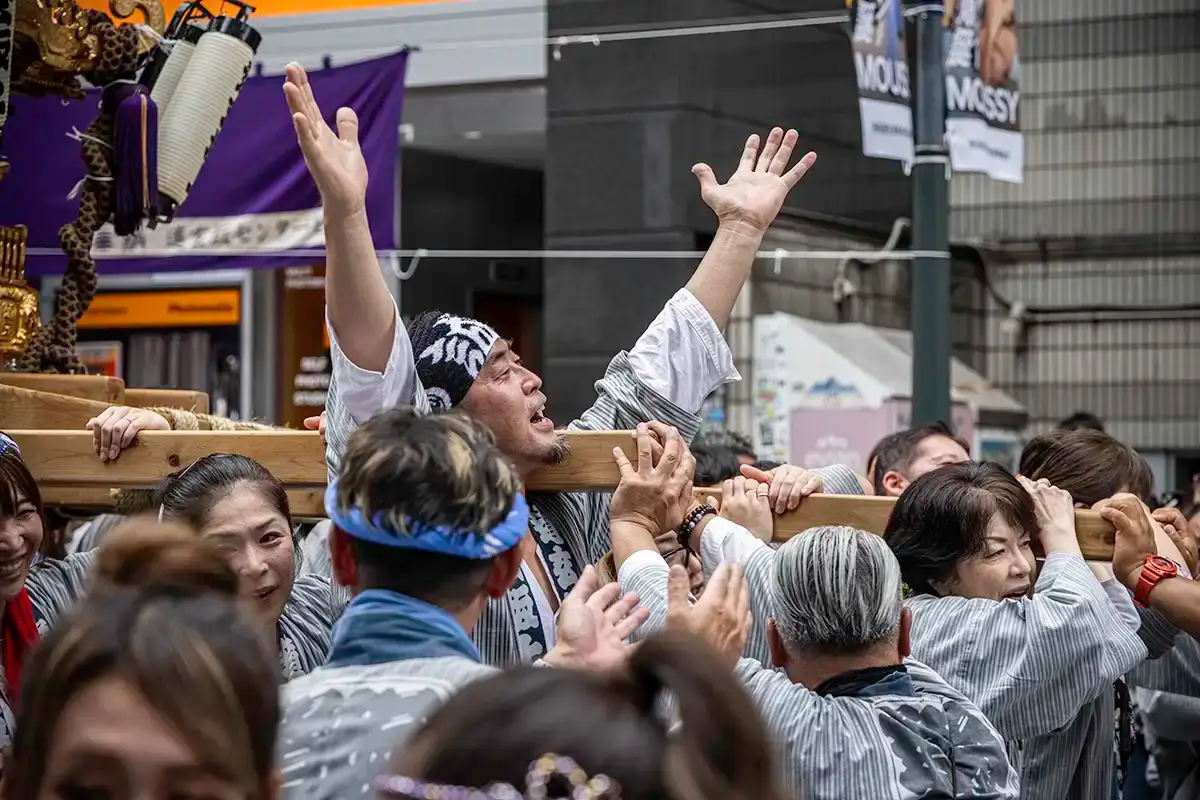
The undisputed highlight of the festival is the grand procession of mikoshi (portable shrines) on the final day. Fourteen of them paraded through the streets of Aoyama and Shibuya, creating a huge spectacle. They came together in front of the iconic Shibuya 109 building. The spirited chants of the carriers and the enthusiastic crowds create a palpable sense of unity and excitement. This convergence of tradition and modern cityscape was a sight to behold.

It was something completely new for me to see the mikoshi make their way down a hill lined with shops and businesses. A mass of festival lovers turned out to see the event, with the police blocking off the road to traffic to accommodate the procession. The energy of the carriers, dressed in traditional happi coats, was infectious as they rhythmically swayed and hoisted the heavy shrines.

History of the Konno Hachimangū Shrine

The festival is intrinsically linked to the Konno Hachimangū Shrine, a site with a history stretching back over 930 years. Founded in 1092 by the Shibuya clan, who gave their name to the area, the shrine was originally built within the grounds of Shibuya Castle.

The current shrine building, constructed in 1612, is Shibuya Ward’s oldest wooden structure. It’s an example of early Edo-period architecture and has long been a local community spiritual center named Shibuya Hachimangū. Later, it became Konnō Hachimangū in honor of Konnōmaru, a son of the Shibuya clan who gained fame in the Hogen Rebellion.

My vantage point on Dogenzaka

I chose to take my photos from Dogenzaka, the famous hill near the Shibuya 109 department store. As I settled in, it was fascinating to think about the history of the spot itself. The origins of the area’s name are a subject of some debate.

One story goes that the area was named after Owada Dogen, a bandit who was a remnant of the defeated Shibuya clan and haunted the area in the 16th century. This bustling commercial street was once filled with forests and fields. It’s said that one could even see Mount Fuji from its summit.

Standing there amidst the modern bustle, it was fascinating to ponder the history as I waited for the parade to begin. The conditions changed over the course of the afternoon. In the beginning, the streets weren’t crowded, except for a space in front of UniQlo being used by some flamboyant taiko groups. Once they finished, I moved further up the Dogenzaka hill, listening for the approaching procession. It didn’t take long, as the familiar chant of “Wasshoi!” (わっしょい) could be heard, and I headed right for it.

My Canon RF 24-105mm lens is a workhorse and performed well for capturing the wider scene, but I found it lacked reach when the action intensified. With the immense weight of the mikoshi and the sheer number of people carrying them, getting too close can be dangerous. I wished for a longer lens, like a 70-200mm, which would have been perfect for safely zooming in to capture the expressions on the carriers’ faces.

Conclusion

Witnessing the tradition of the mikoshi parade unfold in the trend-setting heart of Shibuya was unforgettable. The energy of the procession against the backdrop of the district’s modern landmarks is a memory I’ll cherish. Next time, I hope to delve even deeper by visiting the Shibuya Konno Hachimangū Shrine for its festivities, too.

Where is the most unique place you’ve photographed mikoshi in Japan? Share your experiences in the comments section.

Picture of Rohan Gillett

Rohan Gillett

Rohan has photographed Tokyo since 2011. He shoots it with his Canon EOS R5. There are no plans to stop.

More festival articles

Yasukuni Shrine cherry blossoms torii gate
Yasukuni Shrine Cherry Blossoms in 2022

The Yasukuni Shrine cherry blossoms in 2022 were the best I had ever seen there. Under brilliant weather, the flowers looked gorgeous. Mother Nature gave visitors a special treat that day! Unfortunately, we also lost a dear friend. Anyway, it was a great day of photography.

Read More »
Keio Mogusaen plum blossoms
Keio Mogusaen Plum Blossoms 2022

The Keio Mogusaen plum blossoms in 2022 were beautiful. I was excited to see them for a special reason. I would use the Fujifilm MCEX-16 macro extension tubes I recently purchased. While I got many good photos, the day didn’t work out as I had planned.

Read More »
concreted bank river cherry blossoms
Testing the Fujifilm X-T2 on Tokyo’s Cherry Blossoms

There’s a special kind of excitement that comes with unboxing a new camera. In 2017, that camera for me was the Fujifilm X-T2, paired with the highly-praised XF 16-55mm f/2.8 lens. After years with my trusty Pentax K-3, this new kit felt like a different beast altogether. To get a

Read More »

Leave a Reply

Your email address will not be published. Required fields are marked *