Copyright © 2024 Tokyo in Pics | Powered by Tokyo in Pics
Yabusame: Photos from Meiji Shrine Grand Autumn Festival
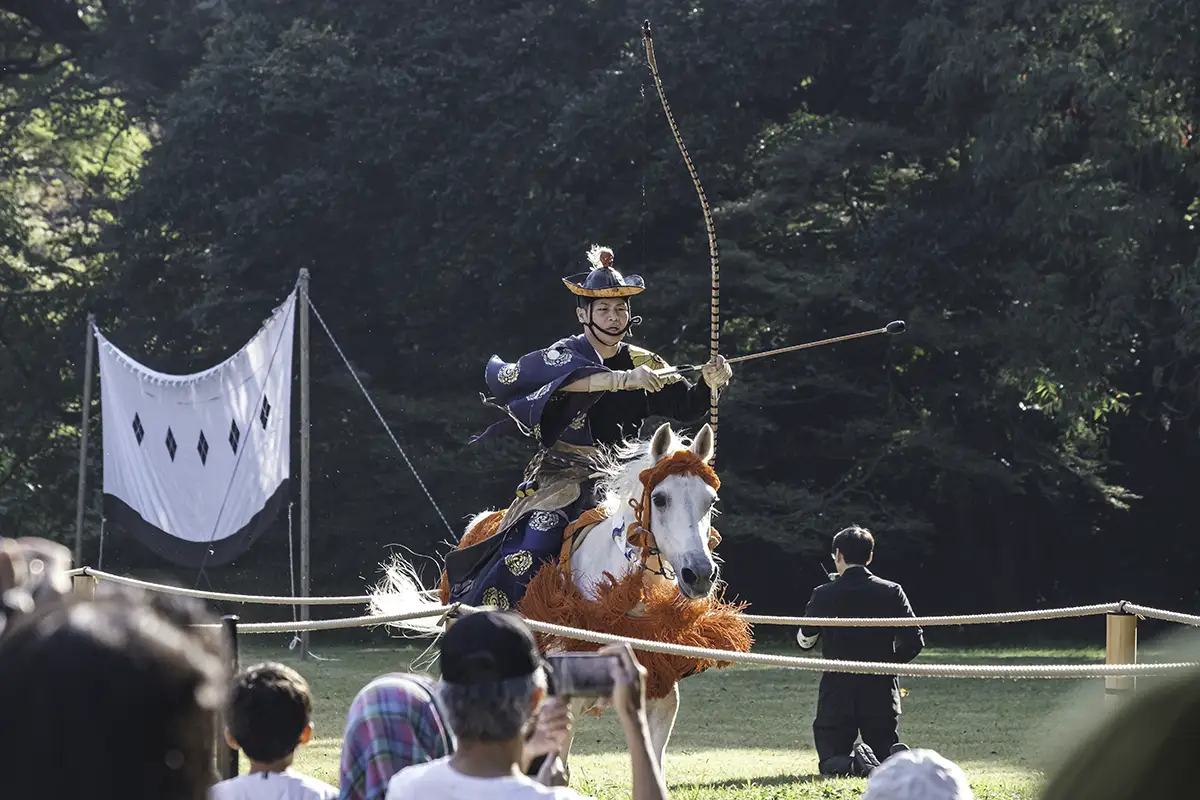
Yabusame and martial arts at Meiji Shrine. What an exciting weekend. It happened at the Grand Autumn Festival. If you want to photograph samurai things, this event is for you! The last time I saw it, I didn’t have a camera. This time, I did. I got good pictures!
What is the Meiji Shrine Autumn Grand Festival?
It is a 3-day cultural demonstration that celebrates Emperor Meiji’s birthday. It happens at his shrine in Harajuku. The festival introduces visitors to Japanese performance arts. It also has a martial arts display. That is what I went to in 2023.

What did I see at the festival in 2023?
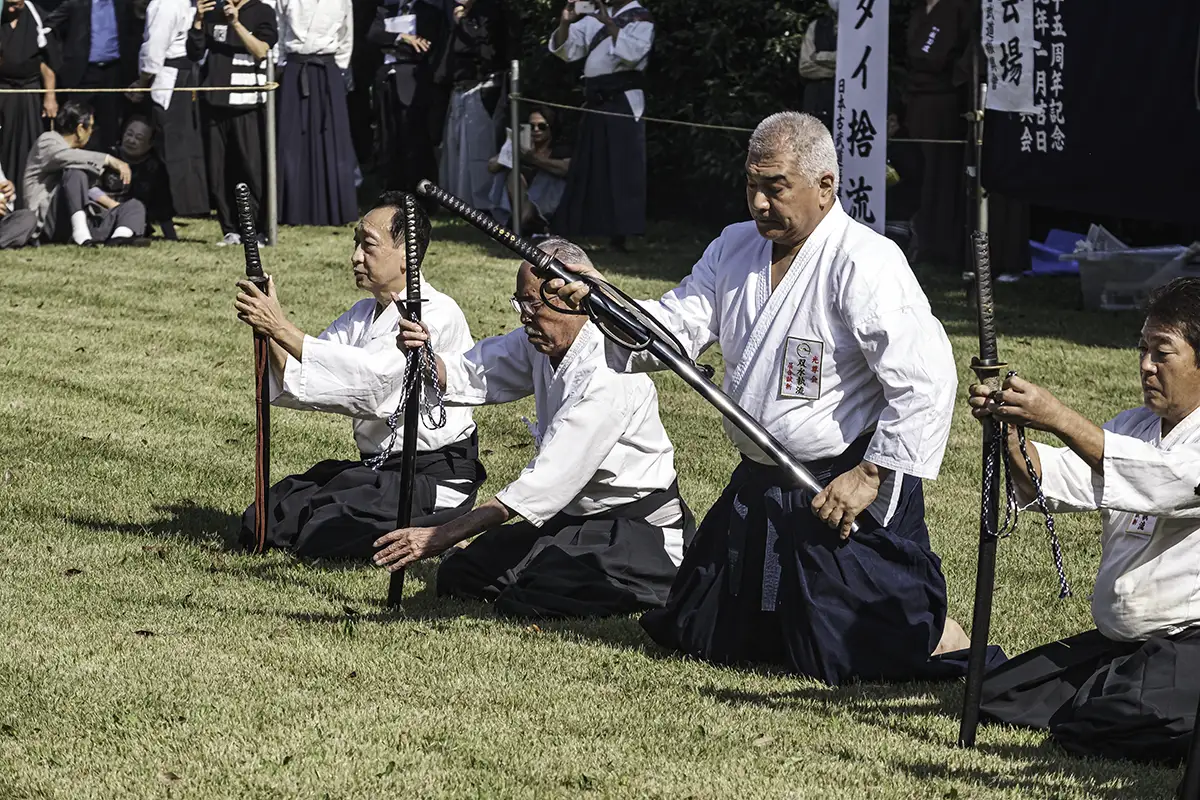
During my time there, I saw many of Japan’s martial arts. I saw Aikido, Kyudo, Kobudo, shuriken, and various sword displays. It was impressive.
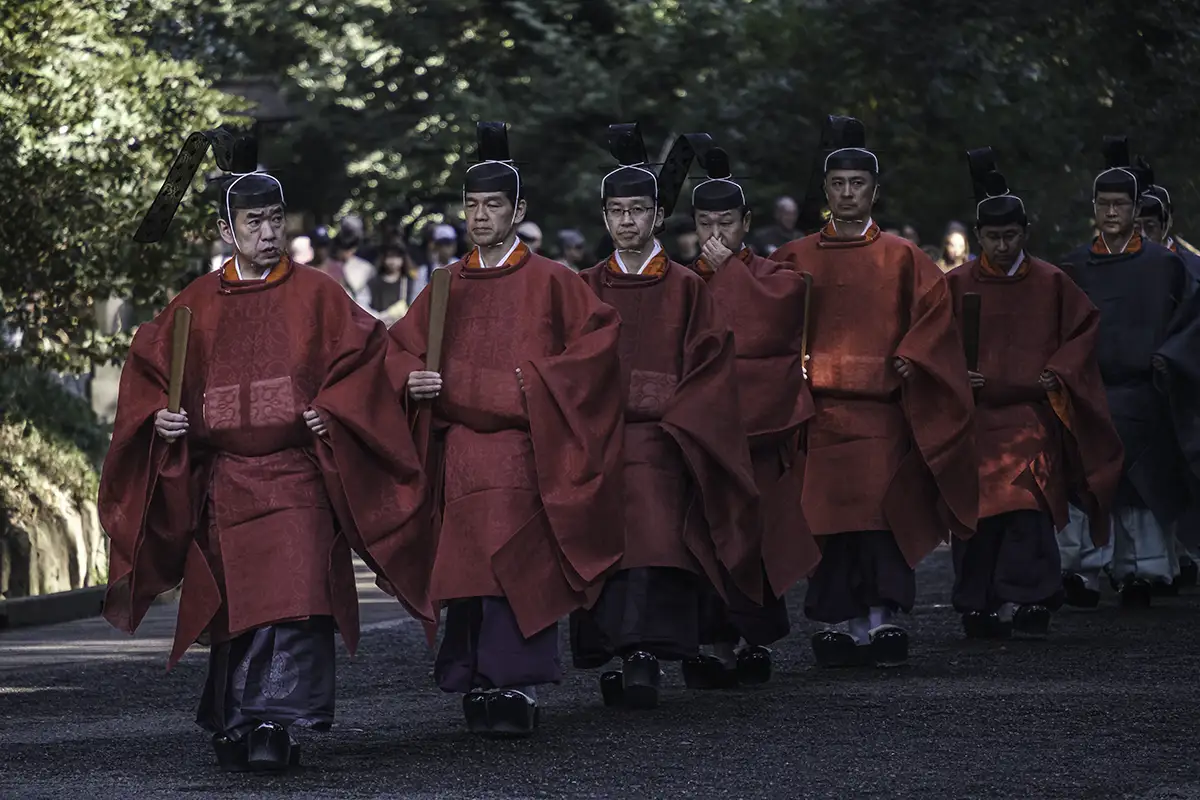
I got many photos of these displays, but my main target that day was yabusame. Do you know it? It is horse archery.
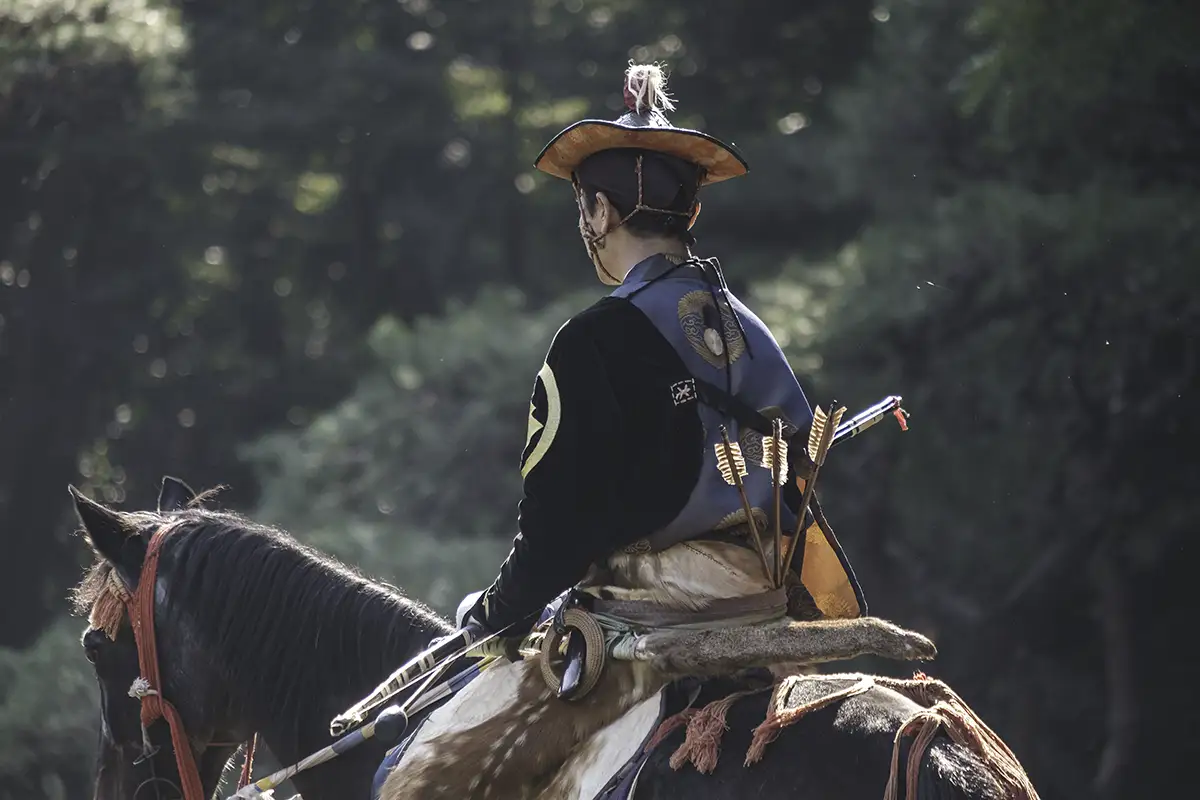
What is Yabusame?
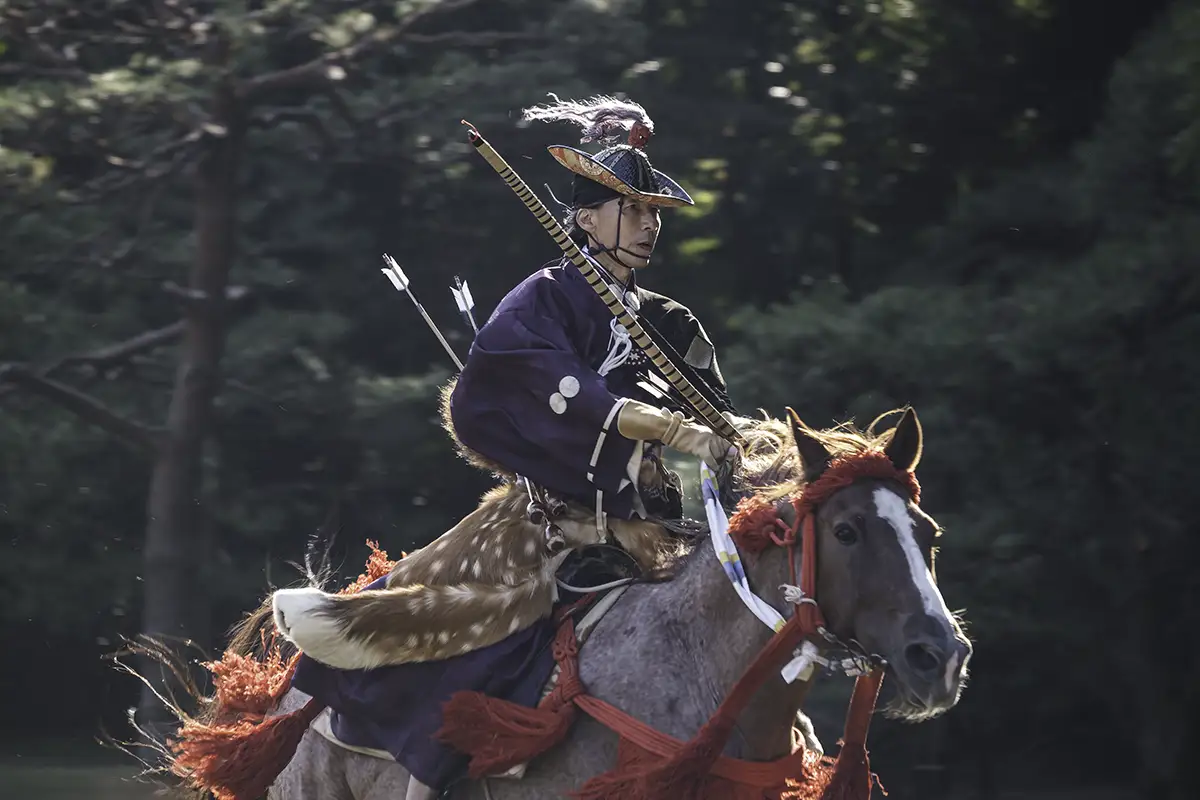
It is horse archery. The riders have a bow and three arrows. They charge, and I mean charge, down a 218-meter-long course. With their weapons, they need to hit three paper targets. It is very fast, and I imagine, a little dangerous.
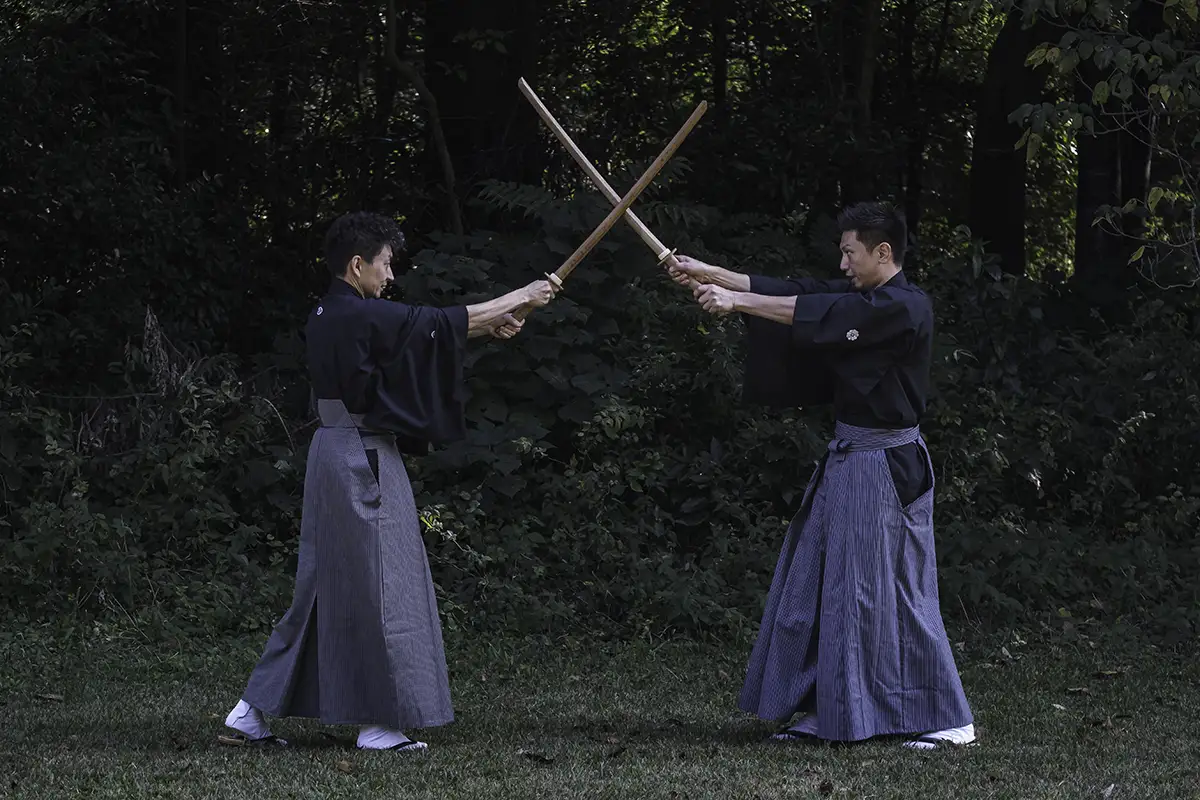
The sport is colorful and filled with history. I thought it demonstrated samurai skills, but it’s not exactly. It started as a Shinto ritual. Emperor Kinmei performed it in the sixth century at Usa Shrine in Oita prefecture. The skills certainly got a lot of use during Japan’s Sengokujidai (Period of Warring States).
Some exhibitions are used to predict the fortune of the coming year. The more target hits mean a better year, and vice versa. It is a highly ritual sport, complete with priests, blessings, and Shinto rituals.
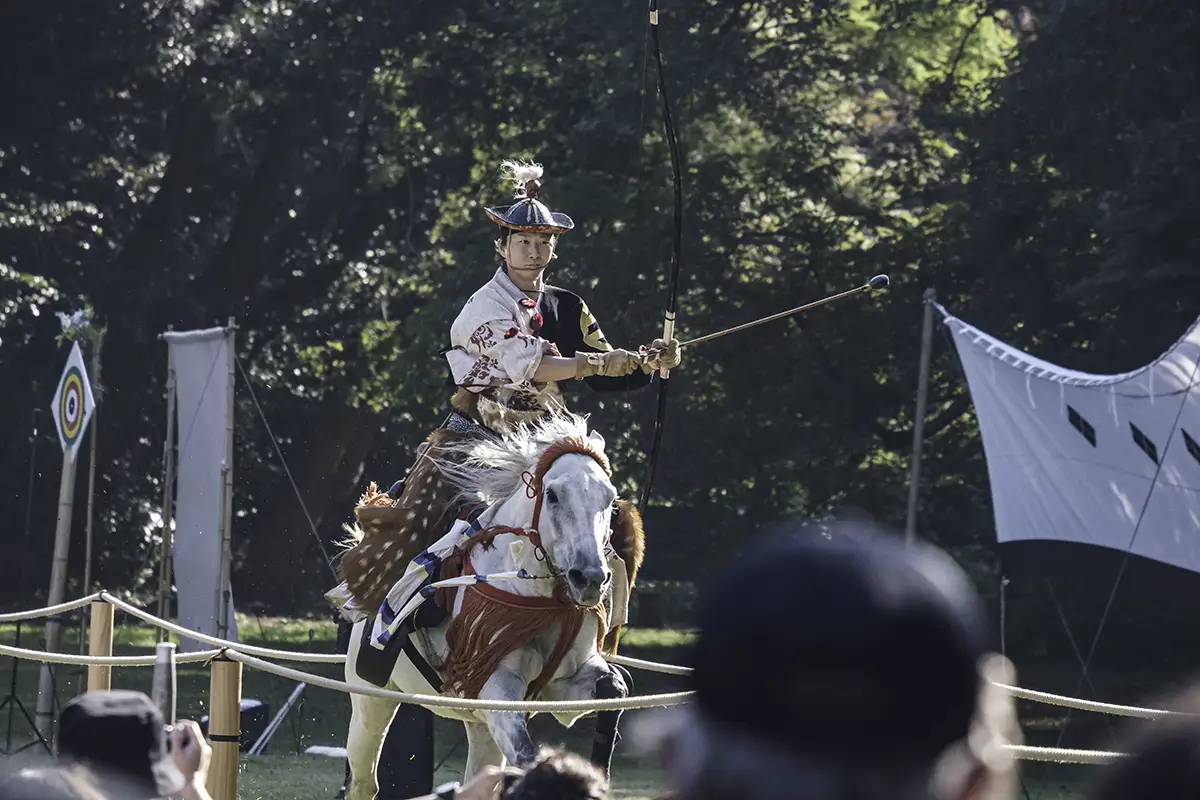
From what I’ve read, yabusame exhibitions give archers three runs down the course. The faster the horse runs, the harder it is to hit the targets. It looks so hard.
If I were a younger man, I’d love to try yabusame. It is the most attractive Japanese martial art. But I’ve never practiced any of those, except for a short stint at judo in primary school. That prevented me from blogging about it. I felt I lacked any type of competency to write an article.
Is Yabusame challenging to photograph?
It can be. My main problem was the crowd. There were so many people. As I was in the middle, many obstacles were in the way.

One more problem was the speed. You could hear the horses thunder down the runway, but a tent was next to the runway. That blocked the view, as it was in front of me. So you need to pay good attention depending on where you are.
Having continuous autofocus was a great help. If the people hadn’t been there, it would have been easy to photograph the riders and their horses. Next year, I’ll go earlier and grab a better spot.

Wrapping up
The Grand Autumn Festival was incredible. The martial arts displays were so good. Anyone with an interest in the samurai should see it.

The main attraction was the yabusame. It had color, ceremony, and excitement. The images of the riders and horses thundering down the runway will stay in my mind for many years. I can’t wait to see them in 2024.
What Fujifilm camera gear did I use for this event?
- Camera Body: X-T3
- Lenses: XF 55-200mm f/3.5-4.8 R LM OIS
For more samurai-related articles, look at:
External sites about Yabusame